
Gold Stripping Machine
— Gold Stripping Machine
A gold stripping machine — also called a gold deplating machine or gold stripping system — is purpose-built equipment that removes the gold plating layer from gold-plated e-waste such as PCBs, CPUs, RAM modules, IC lead frames, connectors and other plated scrap, using a patented cyanide-free chemical stripping process.
Our Gold Stripping Machine, together with the E-Waste Recycling Plant and Precious Metal Refining Plant, forms a complete e-waste recycling system, achieving a gold recovery rate of up to 99% and a gold purity of up to 99.99%. Our patented stripping agent contains no cyanide or toxic substances; it dissolves only the surface gold, leaving base metals such as lead, nickel, iron, and tin unaffected, thus preserving their value.
Product Overview
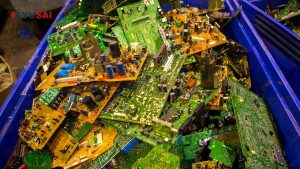
The Gold Stripping Machine is a chemical stripping line specially designed to strip gold from gold-plated materials recovered from obsolete and junked electronic products. It is the essential front-end equipment for e-waste recyclers, PCB processors, electroplating shops and precious metal refiners handling gold-plated scrap.
The system uses a patented, cyanide-free stripping agent that dissolves only the surface gold layer. Lead, nickel, iron, tin and other metals in the substrate remain completely untouched. This selectivity is the core advantage over whole-part dissolution: you recover the gold without destroying the base material, and you never handle cyanide.
The stripped crude gold can be easily refined to obtain gold with a purity of 99.99% after subsequent precious metal refining processes. The stripped material itself can be further processed to recover precious metals such as gold, silver, palladium, platinum and rhodium, achieving the recycling and reuse of high-value resources. Combined with an automatic component dismantling machine and a refining line, the system forms a complete gold-recovery train from scrap electronics to sellable gold.
Recovery Value Analysis
Gold price reference. Gold spot was around USD 4,600/troy oz (≈ USD 148/gram) in late August 2026 (Kitco spot reference). Gold prices fluctuate — update this figure before quoting to end customers.
Physical conversion. Gold density is 19.3 g/cm³, which gives the key planning formula:
1 µm of gold plating on 1 m² of surface = 19.3 grams of gold
Typical plating thicknesses found in e-waste (industry ranges — verify with XRF on your actual material): PCB gold fingers and edge connectors typically carry 0.3–1.5 µm of hard gold, CPU and IC lead-frame plating 0.3–1.0 µm, connector contacts and relays 0.5–2.5 µm, and decorative or hobby plating 0.1–0.5 µm.
Worked example (illustrative). 100 kg of gold-finger scrap averaging 0.8 µm over an estimated 25 m² total surface holds 25 × 19.3 × 0.8 = 386 g of gold ≈ USD 57,000 at USD 148/g. At the system’s 99% recovery rate, roughly USD 56,500 is recoverable per batch before refining cost. Actual results depend on measured thickness, surface area, gold price and scrap sourcing cost — we recommend a free XRF analysis of your material before valuing any deal.
Recovery & separation performance.
- Gold recovery rate: up to 99% (manufacturer-tested)
- Gold separation rate: 99%, with high purity of recovered gold powder
- Deplating speed: 0.5–2 mm/min average
- Selectivity: no dissolution of lead, nickel, iron or tin substrate metals
- Substrate preservation: no stain or attack on nickel or tin layers
Secondary revenue. Because the agent does not attack the substrate, the stripped base material remains a clean, saleable scrap stream (copper-based boards, nickel-plated parts). This by-product revenue reduces net operating cost and improves overall project economics.
Applicable Materials
The Gold Stripping Machine applies to a wide range of gold-plated scraps generated in daily life and industry:
Consumer electronics (obsolete & junked)
- Waste cellphone circuit boards and mobile phone mainboards
- Computer CPUs and motherboards
- Memory modules (RAM) gold fingers
- VCDs, DVDs, TV circuit boards, game consoles
- Fax machines, telephone sets and other old domestic appliances
- Remote controls, chargers and small appliance boards
Plating & manufacturing industry off-cuts
- Electroplating factory leftovers, rejects and rack scrap
- Electronic components manufacturing off-cuts (lead frames, contacts, pins)
- Printing house and photosensitive materials plant scrap
- Gold-plated connectors, switches, relays and terminals
Jewellery & accessories
- Gold-plated jewellery rejects and overplated work
- Plated watch parts, chains and fashion accessories
Key material pre-conditions
- Material must be gold-plated (surface layer), not gold alloy — alloys require refining, not stripping.
- Sort by substrate type before processing; remove gross contamination and non-plated scrap to maximise bath efficiency.
- Separate solder-coated parts — solder interferes with stripping solution life.
System Structure & Main Equipment
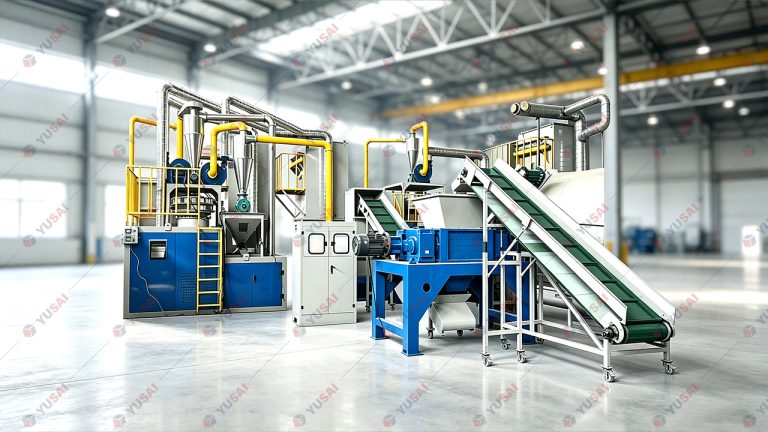
A complete Gold Stripping System comprises the following sections:
Stripping section
- PP/HDPE stripping tank with lid and vapour extraction (sizes 100–2,000 L, custom on request)
- Solution dispensing and mixing unit for the patented cyanide-free stripping agent
- Heating system with thermostat (40–60°C, ±2°C) where required
- Agitation / solution circulation pump with sparger
- Perforated PP loading baskets or racks
Filtration section
- Corrosion-resistant filter press or cartridge filtration unit for solution clarification
Gold recovery section
- Reduction tank with slow-speed stirrer
- Reduction powder dosing system
- Settling cone / thickener for black gold powder collection
- Peristaltic pump for solution transfer
Washing & drying section
- Washing tank with DI water supply and conductivity meter
- Drying oven (110–120°C, stainless steel interior)
Safety & environmental
- Fume extraction hood and scrubber (water/condensation type for the cyanide-free chemistry)
- Emergency shower and eyewash station
- Sealed, ventilated chemical storage cabinet
Analytical & QC
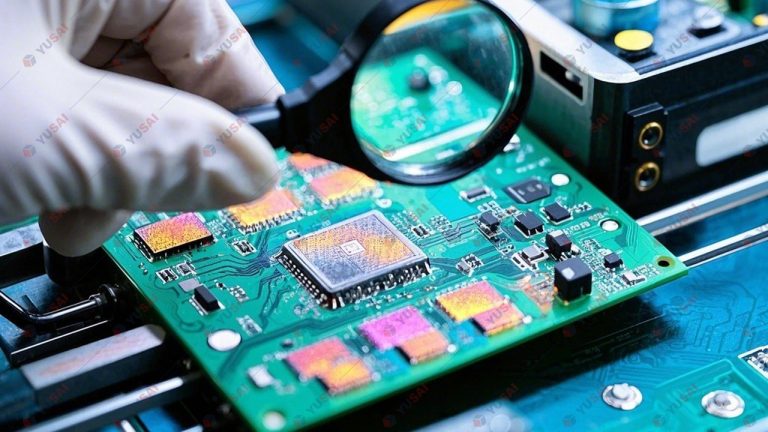
- Handheld XRF (plating thickness measurement, residual gold verification)
- SnCl₂ endpoint test kit (verifies gold-free spent liquor)
- Analytical balance
Gold Stripping Machine Working Process
The system follows a proven four-stage chemical process using the patented cyanide-free stripping agent:
Process flow at a glance: solution preparation → immersion stripping (surface gold dissolves at 0.5–2 mm/min while the substrate stays untouched) → filtration → reduction (gold precipitates as black crude powder) → optional refining to 99.95–99.99% gold bars → spent solution management (SnCl₂ endpoint test, then regenerate or dispose as hazardous waste).
Stage 1 — Stripping solution preparation. The cyanide-free stripping agent is dispensed and mixed with water in the stripping tank to the specified working concentration. Solution temperature and volume are set per batch size and material type.
Stage 2 — Immersion stripping (gold dissolution). Gold-plated materials are loaded into the stripping solution in baskets or racks. The surface gold dissolves rapidly into the solution as a stable gold complex, while no other metals — lead, nickel, iron, tin — dissolve (patented selectivity):
Au (surface) + stripping agent → gold complex (solution) Ni / Sn / Cu substrate remains intact
Stripping proceeds at an average rate of 0.5–2 mm/min. The endpoint is visible: the golden surface colour disappears, revealing the intact base metal. Selective stripping allows alternative or sectional stripping where only part of a part is plated.
Stage 3 — Filtration. The gold-loaded solution is filtered to remove insoluble impurities (dust, debris, base-metal particles) before gold recovery, protecting the quality of the final gold powder.
Stage 4 — Reduction & gold powder recovery. Reduction powder is added to the filtered solution; the dissolved gold is reduced and precipitates as black crude gold powder:
Gold complex (solution) + reduction powder → Au↓ (black powder) + spent liquor
The black powder settles, the supernatant is decanted, and the crude gold powder is collected, washed with hot deionised water and dried at 110–120°C.
Stage 5 — Further refining (recommended). The crude gold powder (typically 90–98% Au) is fed to a gold refining machine — aqua regia, electrolytic or chlorination route — to produce 99.95%–99.99% gold bars for maximum market value. We supply the complete refining line to match.
Stage 6 — Spent solution management. The spent liquor is verified gold-free with the SnCl₂ endpoint test (no purple colour) before treatment. The stripping agent can be regenerated/replenished for continued bath life; final barren liquor is treated under the site’s hazardous waste protocol.
Product Features
- Substrate protection — no stain to nickel or tin layers. Removes gold without attacking the underlying nickel or tin layers, allowing manufacturers to replate parts or recover base metals safely.
- High-speed processing. Deplating rate of 0.5–2 mm/min significantly reduces cycle times compared with traditional chemical stripping methods.
- Eco-friendly and safe. Cyanide-free agent eliminates severe health hazards for workers and drastically lowers wastewater treatment costs.
- Selective stripping with high accuracy. Targets only the gold layer, preventing over-stripping and allowing alternative or localized deplating.
- Maximum recovery. A 99% separation rate ensures virtually all gold is recovered from the substrate, yielding high-purity gold during the refining phase.
- Simple four-stage operation. Solution preparation → immersion → filtration → reduction; one operator per line, no specialised chemical skills required.
- Pre-delivery testing guarantee. Every machine is test-run with the customer’s actual material under simulated production conditions before delivery; customers are invited to attend the final test.
- Proven worldwide. Installations operating in Europe under EU environmental compliance, plus multiple plants across Asia and the Americas.
Technical Parameters
| Parameter | GS-100 | GS-300 | GS-500 |
|---|---|---|---|
| Tank capacity (L) | 100 | 300 | 500 |
| Batch loading | 20–30 | 50-100 | 100-150 |
| Gold recovery rate | ≥99% | ≥99% | ≥99% |
| Deplating speed | 0.5–2 mm/min | 0.5–2 mm/min | 0.5–2 mm/min |
| Power | 3 kW | 5 kW | 8 kW |
| Footprint (approx.) | 1.5 × 1.0 m | 2.0 × 1.2 m | 2.5 × 1.5 m |
| Operating temperature | 20–60°C (±2°C) | 20–60°C (±2°C) | 20–60°C (±2°C) |
General specifications
- Final gold purity after refining: 99.95%–99.99%
- Stripping agent: patented cyanide-free formulation; no attack on nickel/tin layers
- Wetted materials: PP/HDPE; titanium heater sheaths
- Automation: manual / semi-automatic (timer + temperature control) / PLC full-automatic
- Batch cycle time: 20 min – 2 h per batch (thickness-dependent)
- Custom tank sizes and full automatic lines available on request
Key Advantages
| Dimension | Our Gold Stripping Machine | Traditional cyanide stripping |
|---|---|---|
| Safety | Cyanide-free agent; no poisonous substances | Cyanide handling risk, severe health hazards |
| Compliance | Simplified environmental permitting, low wastewater treatment cost | Strict hazardous chemical licensing and disposal burden |
| Substrate | No stain or attack on Ni/Sn layers; base metal resaleable | Often damages or contaminates substrate |
| Speed | 0.5–2 mm/min deplating rate | Slower cycle times |
Versus whole-part dissolution (smelting/leaching of entire parts)
- Keeps substrate value — only the surface gold is dissolved; copper-based boards and nickel parts remain clean, saleable scrap that offsets operating cost.
- Higher purity feed — the recovered crude gold powder is a concentrated, high-purity feed for refining, cutting downstream refining cost.
- Lower chemical consumption — the agent is consumed only by the gold layer, not the entire part mass.
Business advantages
- Proven ROI — a 100 kg gold-finger batch can hold ~386 g of gold; at current prices the recoverable value is on the order of USD 50,000+ per batch (illustrative, depends on material and price).
- Low operating cost — one operator per line, no specialised chemical skills required, regenerable stripping agent.
- Complete line support — automatic component dismantling machines and gold refining machines complete the value chain from whole e-waste to 99.99% bars.
- Pre-delivery validation — free XRF analysis and trial stripping of your material; FAT with your actual material before shipment.
Service & Project Workflow
- Sample test — send 1 kg of your plated scrap; free XRF analysis + trial stripping, yield and ROI report within 5 working days.
- System selection — tank size, automation level, complementary equipment (dismantling, refining).
- Quotation — equipment list, price and lead time within 3 working days of test results.
- Manufacturing — standard lead time 4–8 weeks; FAT with your material before delivery.
- Delivery & installation — export packaging; on-site installation and commissioning by our engineers (or remote video guidance).
- Training — operation, safety, chemistry, QC and maintenance training; SOP manuals provided.
- After-sales — 12-month warranty, spare parts, remote video support and process optimisation visits.
Operation & Safety Notes
Material preparation
- Sort and assay before pricing: verify plating thickness with XRF. Gold value follows the physical conversion 19.3 g/m² per µm — never price plated scrap by visual estimate.
- Separate solder-coated parts and gold-alloy items; they are not suitable for stripping.
- Remove gross contamination and batteries; check for non-plated steel housings mixed into the batch.
Process operation
- Prepare the stripping solution to the specified concentration — over-concentration is not faster and shortens bath life.
- Monitor the stripping endpoint visually and with periodic XRF spot checks; over-immersion wastes agent and risks substrate attack.
- Always filter the loaded solution before reduction — unfiltered solids contaminate the gold powder and lower its purity.
- Verify reduction completion with the SnCl₂ endpoint test (no purple colour) before decanting the spent liquor.
- Keep a batch ledger: input XRF value vs recovered powder vs losses — target accounting accuracy within ±2%.
Safety & compliance
- Although the agent is cyanide-free, always handle chemicals with gloves, goggles and apron; the room needs adequate ventilation and an eyewash/shower.
- Spent liquor and wash water are hazardous waste — treat and dispose under your hazardous waste permit; never discharge gold-bearing solution.
- Confirm local environmental regulations; the cyanide-free chemistry simplifies compliance compared with traditional cyanide stripping.
Equipment maintenance
- PP tanks: do not exceed 60°C continuously; inspect welds and fittings for leaks.
- Titanium heaters: never run dry; descale regularly.
- Filter cloths and cartridges: inspect for breakthrough; replace on schedule.
- Calibrate XRF instruments and analytical balances quarterly.
FAQ
Q1: What is the difference between gold stripping and gold refining?
Stripping removes the gold plating layer from base-metal substrates and concentrates it into a gold-rich solution and crude gold powder. Refining purifies that powder to 99.95%–99.99% gold bars. Stripping is the front-end; refining is the back-end. Most e-waste recyclers run both.
Q2: Does the stripping agent contain cyanide?
No. It is a patented cyanide-free formulation containing no poisonous substances — a decisive advantage over traditional cyanide+oxidant stripping, simplifying safety management and environmental compliance in markets with strict chemical regulation.
Q3: Will the stripping solution damage the nickel or tin layer?
No. The patented agent dissolves only surface gold; lead, nickel, iron and tin remain undissolved, and there is no staining of nickel or tin layers. The stripped substrate can be sold as clean scrap.
Q4: How fast is the stripping process?
The average deplating speed is 0.5–2 mm/min. A typical batch completes in 20 minutes to 2 hours depending on plating thickness, temperature and agitation.
Q5: How much gold can I recover from my plated scrap?
Measure plating thickness and surface area: 1 µm on 1 m² = 19.3 g of gold. At 99% recovery, 25 m² of 0.8 µm gold fingers yields ~382 g of gold (worth tens of thousands of USD at current prices, before refining). Send us a sample — we run a free XRF analysis and trial stripping and return a yield report per kilogram of your material.
Q6: What is the minimum batch size?
Bench/trial units handle a few kilograms; production systems start at 100 L tanks (20–30 kg per batch) and scale to 2,000 L (300–400 kg per batch).
Q7: Can the stripped substrate still be sold?
Yes — substrate preservation is a core advantage. Clean copper-based boards and nickel parts are sold as scrap, generating by-product revenue that typically covers a large share of operating costs.
Q8: Do you test the equipment before delivery?
Yes — every machine is test-run under simulated real production conditions using your actual material before delivery, verifying line performance and output. Customers are sincerely invited to attend the final test at the factory.
Q9: What after-sales support do you provide?
Installation and commissioning supervision, operator training (process + safety), SOP manuals, spare parts, remote video support and process optimisation visits. A 12-month equipment warranty is standard.

Get A Free Quote
Tell us your target materials, capacity and site conditions — our technical team will design the right e-waste recycling plant for you.
- +86 18339216321
- info@yusaipreciousmetals.com
- Zhengzhou.Henan.China
If you be interested in our equipment and solutions, please to contact us.
- +86 18339216321
- info@yusaipreciousmetals.com
- zhengzhou.henan.china