
PCB Dismantling Machine
— Turnkey Precious Metal Refining Plant
PCB component dismantling machines are used to remove electronic components from waste PCBs. Because these components contain various precious metals, some can be sold separately at higher prices. The motherboard after component dismantling is easily broken, and the copper foil is easier to separate. Maximizing profits also reduces the workload of subsequent processes and increases the recovery rate of precious metals.
The main process involves heating the PCB to melt the solder, then separating the PCB motherboard from the electronic components. They are thoroughly separated through rolling friction. During this process, we use filters to treat the exhaust gas. After three stages of treatment, it does not pollute the environment.
Product Overview
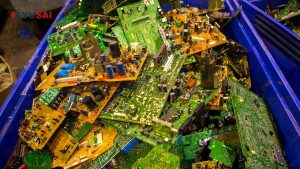
A PCB dismantling machine (also known as a circuit board dismantling machine or PCB component dismantling machine) is an automated e-waste recycling machine that separates electronic components from waste printed circuit boards. Its raw materials cover computer motherboards, mobile phone PCBs, TV boards, home appliance boards, automotive boards and PCB scraps — virtually every type of scrap circuit board with precious metal content.
In the process involves heating the PCB board to melt the solder, then separating the PCB motherboard and electronic components. They are thoroughly separated through rolling friction. During this process, the exhaust gas is first adsorbed by activated carbon to remove formaldehyde. Then, water is sprayed to allow the exhaust gas to settle. Finally, we use filters to treat the exhaust gas. This three-stage treatment ensures no environmental pollution.
Three output streams are recovered: tin from the melted solder, electronic components (many loaded with gold, silver and palladium) and clean PCB motherboards — each routed to the most profitable downstream process, from gold stripping to copper electrolysis and precious metal refining.
Recovery Value Analysis
Waste circuit boards are one of the highest-value streams in e-waste, but their value is locked in two very different places: the components and the board itself. Dismantling first unlocks both.
- Components sell at a premium. CPUs, memory chips, gold-plated pins, connectors, MLCC capacitors and other components contain gold, silver, palladium and other precious metals. Sold intact and separately, they command a far better price than when mixed into crushed board powder.
- Boards become easier and cleaner to process. Once components are removed, the bare motherboard is much easier to crush, and copper separation purity improves — raising the efficiency of the downstream PCB recycling machine.
- Tin is recovered as a by-product. The melted solder tin is collected and sold separately instead of being lost in dust or slag.
- No precious metal loss. Gentle, temperature-controlled heating avoids burning components or alloying metals, unlike manual torching or incineration.
Urban-mining context: According to the United Nations Global E-waste Monitor, roughly 62 million tonnes of e-waste were generated in 2022, yet only about 22% was documented as properly recycled. E-waste is far richer in gold than typical gold ore, which is why professional recyclers invest in dismantling and refining lines. On a complete line (dismantling → gold stripping → PCB recycling → copper electrolysis → refining), recovery rates for gold, silver, palladium and copper can exceed 99%.
Applicable Materials
Our PCB dismantling machine handles virtually all common types of scrap circuit boards:
- Computer motherboards, laptop boards and server boards
- Mobile phone PCBs and logic boards
- TV and monitor boards, electronic display boards
- Home appliance circuit boards (washing machines, refrigerators, air conditioners, microwaves)
- Automotive and electric-vehicle electronic boards
- Communication boards (routers, switches, telecom equipment)
- Power adapter and charger boards
- PCB scraps, defective / off-spec printed circuit boards and copper-clad laminates (CCL)
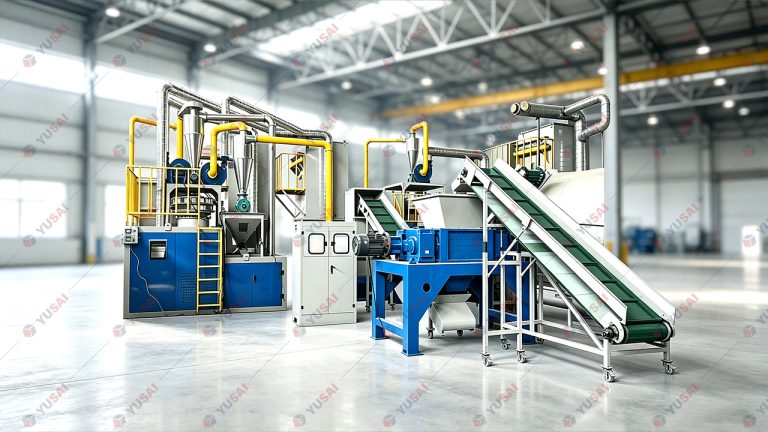
Product Structure — Main Equipment
- Feeding Conveyor — Continuously carries waste PCB boards into the heating chamber at a controlled speed.
- Heating Chamber with Automatic Temperature Control — Uniformly melts the solder on both sides of the board; temperature is regulated automatically by the control system to suit leaded or lead-free solder without burning components.
- Rolling Friction Separation Section — Rolling and friction forces detach the melted components from the motherboard thoroughly, with minimal impact damage.
- Cooling Section — Cools the separated materials before discharge, improving handling and downstream processing.
- Dual Discharge Outlets — Independent collection of electronic components and PCB motherboards for separate downstream processing.
- Three-Stage Exhaust Gas Treatment System — (1) activated carbon adsorption for formaldehyde, (2) water spraying for sedimentation, (3) final filter — ensuring smoke-free, compliant emissions.
- Electrical Control Cabinet — PLC-based control with temperature display, speed adjustment and safety interlocks; voltage customizable to local standards.
Process Flow
The complete working process of the PCB dismantling machine:
- Feeding — Waste PCBs are loaded onto the conveyor automatically.
- Heating — The board passes through the heating chamber; the tin solder melts as temperature is automatically controlled.
- Separation — Rolling friction separates the electronic components from the motherboard thoroughly.
- Cooling — Materials are cooled before discharge.
- Output — Components: precious-metal-bearing components go to the gold stripping machine / precious metal refining plant.
- Output — Motherboards: clean boards go to the PCB recycling machine (crushing + electrostatic separation) for metal powder and resin powder, then copper electrolysis.
- Emission Control: exhaust gas passes through activated carbon → water spray → filter (three-level treatment, no pollution).

Product Features
- Fully automatic operation — labor-saving design; only two operators are enough to run the whole line.
- One-step process — tin removal and component dismantling are completed at the same time, in a single pass.
- Automatic temperature control — the proprietary heating system keeps the temperature precise and stable, melting solder without burning components.
- Large processing capacity — multiple capacity grades available for industrial-scale recycling.
- Safe and easy operation — user-friendly interface with safety interlocks; no open flame and no manual torch work.
- Gentle on components — rolling friction causes minimal damage, keeping precious metals intact with no loss.
- Maximized economic benefits — motherboards and components are processed separately in the next step, each routed to its most profitable recovery route.
- Environmentally friendly — all smoke and exhaust gas is processed by the waste gas treatment system; three-level treatment means no pollution to the environment.
Technical Parameters
| Model | CCJ-300 | CCJ-500 |
|---|---|---|
| Capacity | 200–300 kg/h | 400–500 kg/h |
| Power | 5 kW | 7.7 kW |
| Overall Dimension (L×W×H) | 1.8 × 1.5 × 1.6 m | 2.3 × 1.8 × 1.8 m |
| Heating Temperature | Adjustable, typically 180–300 °C (suits leaded and lead-free solder) | |
| Voltage | 220 V / 380 V / 415 V, 50/60 Hz — customizable to local standards | |
| Operators Required | 2 persons | |
| Exhaust Gas Treatment | Three-stage: activated carbon adsorption → water spray scrubbing → filter | |
Technical Parameters
vs. Manual Dismantling
- Replaces slow, inconsistent manual prying and torch work with one automated pass.
- Eliminates worker exposure to solder fumes, burns and repetitive strain.
- Industrial-scale throughput is unattainable by hand crews at any reasonable labor cost.
vs. Direct Crushing / Incineration
- Burning or crushing boards with components attached destroys the premium component value and contaminates the metal powder.
- Dismantling first preserves precious-metal components for direct resale and makes the board cleaner for high-purity copper separation.
- No open burning means full compliance with environmental regulations for e-waste processors.
Economic Advantages
- Three revenue streams: tin, components, motherboards — each sold or processed at its highest value.
- Low operating cost: low power consumption, only 2 operators and minimal consumables.
- Turnkey integration: connects seamlessly to gold stripping machines, PCB recycling machines, copper electrolysis and precious metal refining plants for a complete urban-mining line.
Manufacturing & Quality Control
Manufacturing Process
- Design & Engineering — each machine is engineered to your feedstock, capacity and site layout.
- Steel frame fabrication — heavy-duty Q235 steel structure, cut and welded by skilled fitters.
- CNC machining & assembly — precision-machined rollers, chains and heating elements; high-temperature insulation in the heating chamber.
- Electrical installation — CE-standard control cabinet, temperature sensors and safety interlocks wired by certified electricians.
- Surface treatment — sandblasting and industrial painting for corrosion resistance.
Quality Control Checkpoints
- Welding quality inspection on all structural joints.
- Electrical safety test: insulation resistance, grounding and leakage checks.
- Temperature control calibration against reference instruments.
- No-load run test and full-load trial run with real waste PCBs.
- Exhaust gas treatment efficiency verification.
- Final inspection and trial-run video recorded before packing.
Our factory operates under an ISO 9001 quality management system, and the equipment can be supplied with CE certification. Machines are packed in waterproof, fumigation-free export wooden cases for safe sea freight.
Manufacturing & Quality Control
- Consultation — tell us your raw materials, daily volume and target outputs.
- Solution design — we recommend the right model and optional configuration, including complete-line planning.
- Quotation — transparent pricing (FOB / CIF / DDP available) within 24 hours.
- Production — standard production takes 15–30 days; progress photos are shared.
- Quality control & trial run — full-load testing with your type of material; trial video sent before shipping.
- Shipping — export packing, customs documents and logistics arrangement.
- Installation & commissioning — remote video guidance included; on-site installation and training optional.
- Operator training — operation, maintenance and safety training for your team.
- Warranty & support — 12–24 month warranty, prompt spare parts supply and lifetime technical support.
Manufacturing & Quality Control
- Remove batteries, large aluminum/copper heat sinks and oversized sealed capacitors from boards before feeding.
- Do not feed wet boards, flammable materials or items containing lithium batteries.
- Operators must wear protective gloves and safety glasses; keep hands away from the heating chamber and moving rollers.
- Do not exceed the rated capacity — overload reduces separation quality and service life.
- Keep the exhaust gas treatment system in operation; replace activated carbon and filters according to the maintenance schedule.
- Ensure correct voltage and proper grounding; electrical work must be performed by a qualified electrician.
- Lubricate rollers, chains and bearings regularly; inspect heating elements and sensors periodically.
- Shut down and lock out power before cleaning or maintenance.
Frequently Asked Questions(FAQ)
Q1. What is a PCB dismantling machine?
A PCB dismantling machine (also called a circuit board dismantling machine or PCB component dismantling machine) removes electronic components from waste printed circuit boards. The board is heated to melt the solder, and the components are separated from the motherboard by rolling friction — recovering tin, reusable components and clean motherboards for precious metal and copper recycling.
Q2. What types of circuit boards can it process?
All common types of scrap circuit boards: computer motherboards, laptop and server boards, mobile phone PCBs, TV and display boards, home appliance boards, automotive electronic boards, communication boards, power adapter boards and PCB scraps. Batteries and large aluminum heat sinks should be removed before feeding.
Q3. What is the processing capacity?
Standard models are available in multiple capacity grades for industrial-scale recycling. Capacity is selected according to your feedstock volume and can be customized — see the technical parameters table for model details.
Q4. Does the machine produce smoke or air pollution?
No. All exhaust gas is treated by a three-stage system: activated carbon adsorption (for formaldehyde), water spray scrubbing and final filtration. After three-level treatment, emissions meet environmental standards and no visible smoke is released.
Q5. What final products come out of the machine?
Three output streams: recovered tin (from melted solder), separated electronic components (many containing gold, silver and palladium), and clean PCB motherboards that are much easier to crush for copper recovery.
Q6. How many operators are required?
Only two operators. Loading is simple and heating, separation and discharge are fully automated with automatic temperature control.
Q7. Can the machine be customized?
Yes. Voltage, heating temperature range, capacity and auxiliary configurations can all be customized to your raw materials and local electrical standards.
Q8. What downstream equipment is needed for a complete PCB recycling line?
Gold-containing components are processed by a gold stripping machine to obtain high-purity gold, then a precious metal refining plant. Motherboards are processed by a PCB recycling machine (crushing + electrostatic separation) into metal powder and resin powder; the metal powder feeds copper electrolysis for high-purity copper, and the anode mud goes to the refining plant for gold, silver, palladium and platinum.
Q9. What after-sales service and warranty do you provide?
Installation and commissioning guidance (remote video or on-site option), operator training, a 12–24 month warranty, prompt spare parts supply and lifetime technical support. A trial-run video is recorded before shipment.

Get a Free Quote
Tell us your target materials, capacity and site conditions — our technical team will design the right e-waste recycling plant for you.
- +86 18339216321
- info@yusaipreciousmetals.com
- Zhengzhou.Henan.China
If you be interested in our equipment and solutions, please to contact us.
- +86 18339216321
- info@yusaipreciousmetals.com
- zhengzhou.henan.china