
E-Waste Recycling Plant
— One-stop, turnkey e-waste recycling plant
Our state-of-the-art e-waste recycling plant transforms electronic waste into high-purity precious metals — gold, silver, palladium and platinum — as well as copper, aluminum, iron and tin. From automated PCB dismantling, crushing and sorting to eco-friendly gold stripping and cyanide-free precious metal refining, we deliver profitable, compliant and environmentally safe turnkey recycling solutions.
The plant achieves a metal/non-metal separation purity of 99%, a precious metal recovery rate of ≥98–99% and final purity of ≥99%. Turning e-waste into treasure not only solves the problem of environmental pollution, but also realizes resource recycling and reuse, and generates significant economic returns — a true “urban mining” business model.
Product Overview
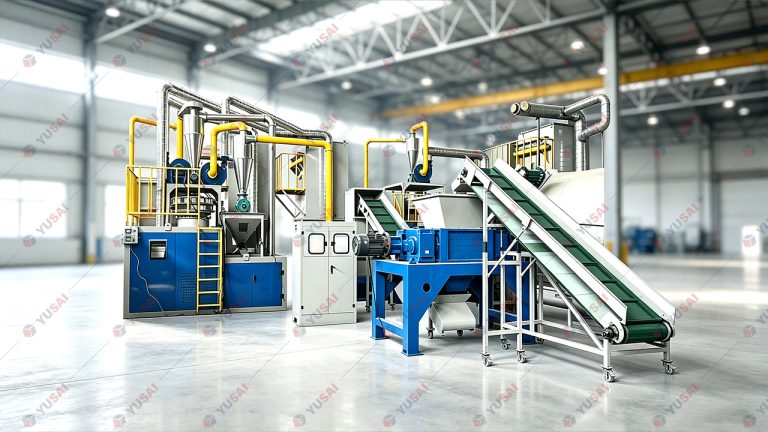
An E-Waste Recycling Plant is not a single machine but a complete system of specialized equipment seamlessly integrated into one production line. The entire plant is organized into four process stages:
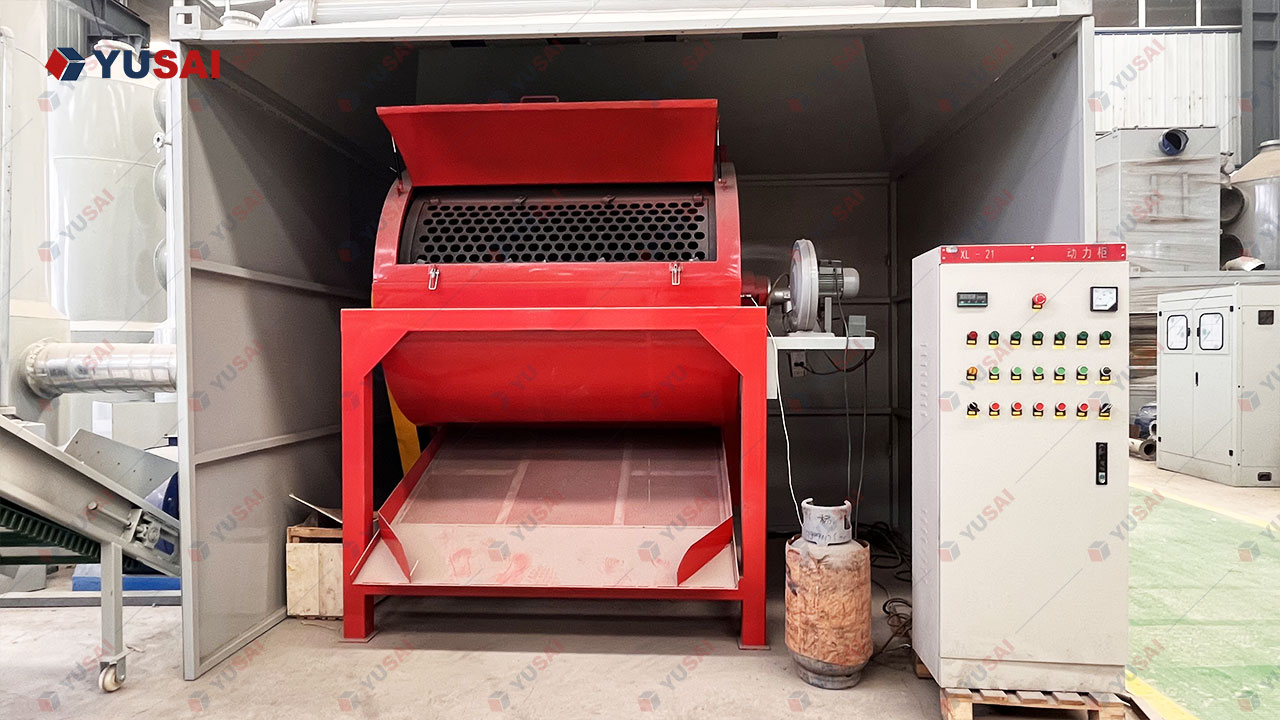
Stage1. Pretreatment — PCB Dismantling Machine : waste circuit boards are heated to melt the tin solder on the board surface, then roller friction thoroughly separates the electronic components from the motherboards with high precision and completeness. The gold-bearing components (CPUs, memory modules, ICs, chip capacitors) are routed to the gold recovery line, while the bare boards continue to the crushing & separation stage — all with three-stage exhaust gas treatment and zero environmental pollution.
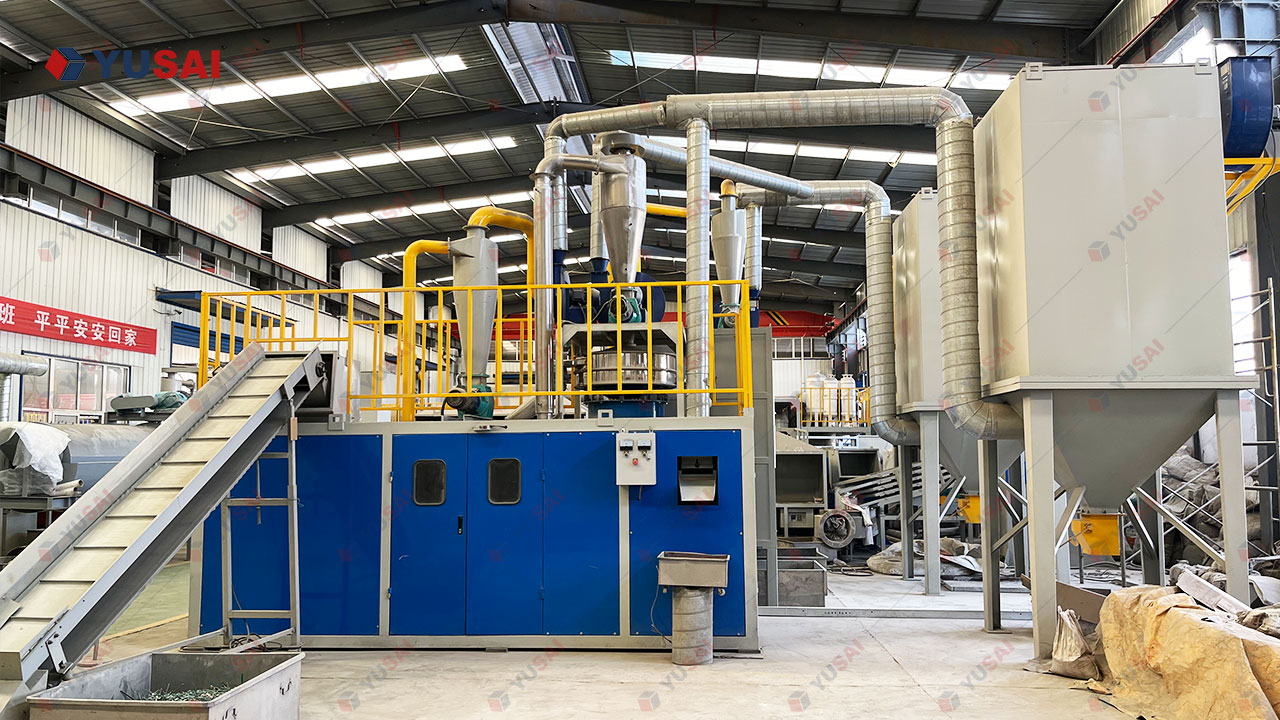
Stage 2. Crushing & Separation — PCB Board Recycling Machine : motherboards and all kinds of circuit boards undergo multi-stage crushing, grinding, magnetic separation, air classification and electrostatic separation, achieving 99% metal/non-metal separation purity and producing mixed metal powder plus resin/glass-fiber powder.
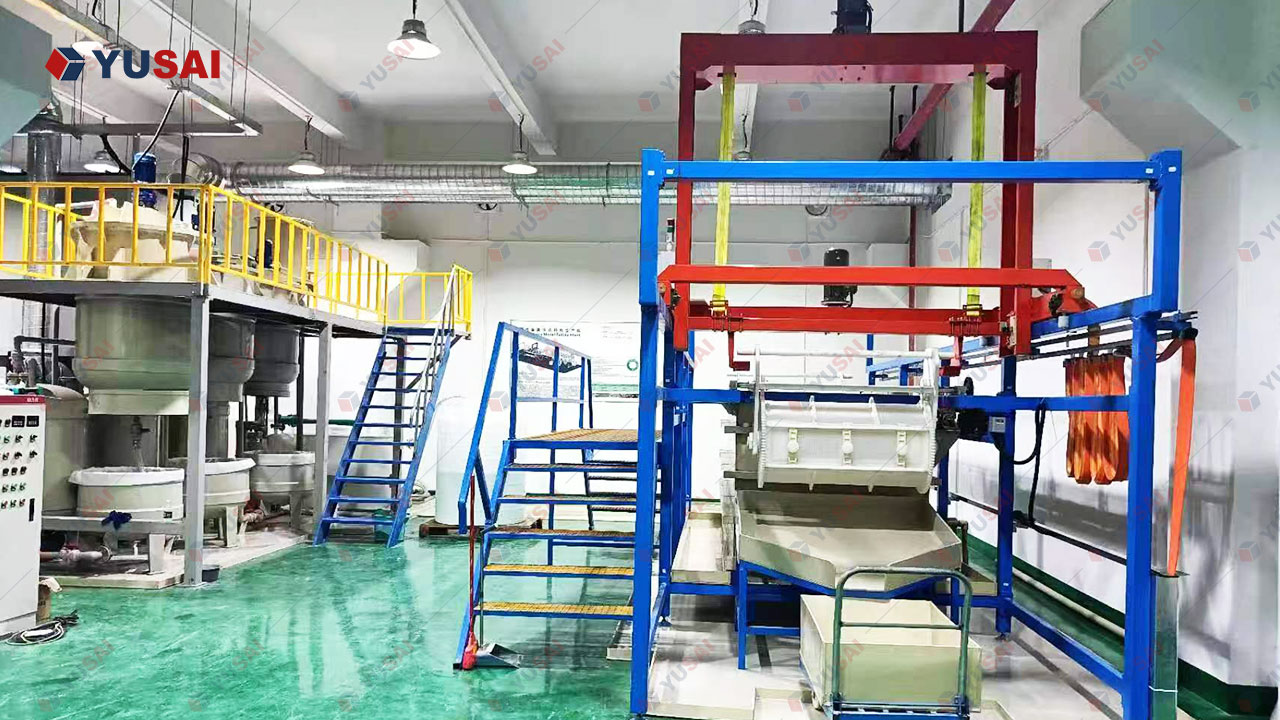
Stage 3. Gold Recovery — Gold Stripping Machine: eco-friendly stripping recovers surface gold from gold-plated components such as CPUs, gold fingers and gold-plated connectors. The stripping chemistry dissolves only the surface gold while base metals (lead, nickel, iron) remain undissolved, yielding crude gold powder with 99% gold purity.
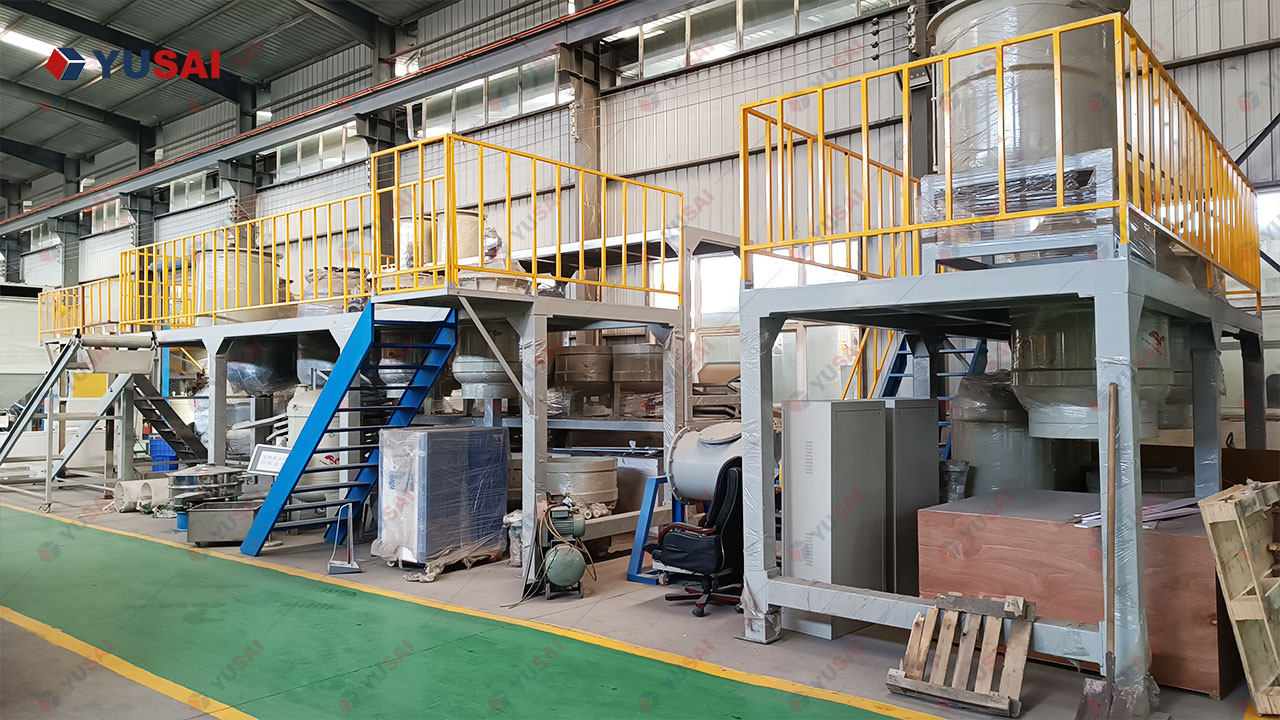
Stage 4. Refining — Precious Metal Refining Plant : gold, silver, palladium and platinum are recovered from precious-metal-bearing chips (MLCC, North-South Bridge, memory chips, chip capacitors) and anode mud through smelting, granulation and cyanide-free hydrometallurgical refining — with a recovery rate of ≥98–99% and purity of ≥99%.
An E-Waste Recycling Plant is not a single machine but a complete system of specialized equipment seamlessly integrated into one production line. The entire plant is organized into four process stages:

The result is a closed-loop value chain: no precious metal profit leaks out of the line, and every output stream — metals, plastics, glass fiber — can be sold directly to downstream buyers.
Recycling Value Analysis
1. Why e-waste is called "Urban Mining"
Electronic waste is one of the fastest-growing waste streams in the world. According to the UN Global E-waste Monitor, over 62 million tons of e-waste are generated globally every year, while only a small share is formally recycled. The concentration of precious metals in e-waste is far higher than in natural ore — which is why e-waste recycling is increasingly described as “urban mining.”
2. Value contained in typical feedstock
- Waste circuit boards (typical): 15–25% copper plus gold (150–300 g/t), silver and palladium;
- Mobile phone boards: gold content can reach 300+ g/t — among the richest e-waste fractions;
- Anode mud (by-product of copper electrolysis): concentrated source of gold, silver, palladium and platinum — the key feedstock for the high-margin refining stage;
- Cables & wiring: copper-plastic fully separated, up to 99% copper purity;
- Plastic & glass fiber (resin powder): sold downstream to composite and plastic industries.
3. Revenue streams of a completed plant
- Precious metals (gold, silver, palladium, platinum) — the highest-value fraction, sold to refiners and investment markets;
- Copper (up to ~20% of e-waste weight) — the largest share by weight and a stable revenue base;
- Aluminum, iron, tin — resold to metal recyclers;
- Resin/glass-fiber powder and plastics — sold to downstream manufacturers;
- In some markets, government subsidies or EPR (Extended Producer Responsibility) mechanisms further improve the business case.
4. Investment and payback reference (industry guide data)
- Facility (rent/purchase, renovation, power & ventilation): 100,000+ / 30,000 / 15,000 USD;
- Core equipment (shredder, PCB recycling machine, battery line, cable line, separator, dust collection): 10,000 – 100,000+ USD per unit;
- Labor (workers 3–10 + supervisors + technicians): ~1,000 – 8,000 USD per month;
- Permits & compliance (environmental permit, waste handling permit, insurance & audits): 2,000 – 5,000+ USD.
Total investment by scale (industry reference, source: Gomine cost guide / IMARC project reports):
- Small (manual, 1–3 workers): ≈ $40,000
- Medium (semi-automated): ≈ $150,000
- Large (fully automated line): ≈ $500,000+
With multiple revenue streams from a single line, most well-run plants recover their investment within 12–24 months — the exact payback depends on feedstock grade, capacity utilization and local metal prices.
Applicable Materials
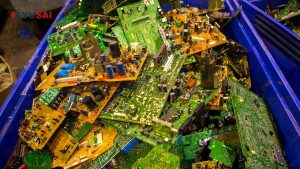
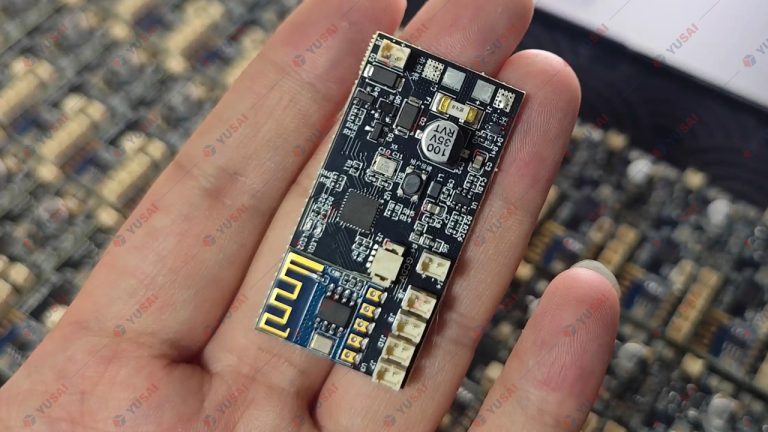
1. Printed Circuit Boards (PCB & Scrap Boards) — Core High-Value Feedstock
The main profit source of an e-waste plant, rich in copper, gold, silver and resin fiber. Processed by the PCB crushing & separation line into mixed metal powder and resin/glass-fiber powder with 99% separation purity.
- Computer boards: motherboards, graphics cards, memory modules, sound cards, network cards;
- Mobile device boards: used phone boards, tablet boards, smartwatch motherboards;
- Appliance control boards: control PCBs from TVs, refrigerators, air conditioners, washing machines;
- Industrial & communication boards: server motherboards, switch boards, base-station boards, power supply boards;
- CCL (copper-clad laminate) scrap: rejected boards and offcuts from PCB manufacturers’ stamping and cutting.
2. ICT & Consumer Electronics
- Personal computing: end-of-life desktops, laptops, servers, monitors;
- Mobile communication: used phones, telephones, walkie-talkies;
- Digital entertainment: cameras, game consoles, MP3/MP4 players, audio equipment, projectors;
- Office automation: printers, copiers, scanners, fax machines.
3. Large & Small Home Appliances (WEEE)
- Large appliances (white goods): refrigerators, air conditioners, washing machines, microwaves;
- Small appliances: electric fans, vacuum cleaners, electric kettles, hair dryers, electric ovens;
- Audiovisual (brown goods): CRT/LCD/LED TVs, DVD players.
4. Electronic Components & Miscellaneous Parts
Single-category waste generated after dismantling electronics or during manufacturing. Cables are processed by a copper granulator (copper-plastic fully separated, 99% copper purity); chips go through gold stripping and precious metal refining to recover gold, silver, palladium and platinum.
- Cables and wiring: used wires, cables, computer data cables, phone charging cables;
- Heat dissipation parts: copper-aluminum radiators, heat sinks;
- Integrated circuits: scrap ICs, North-South Bridge chips, transistors, resistors, capacitors;
- Mixed metal scrap: copper-aluminum mixed material, iron housings, motors.
Final Products
- Precious metals (Au / Ag / Pd / Pt): recovery rate ≥98–99%, purity ≥99% (up to 99.99% via further refining);
- Tin (solder) and electronic components: from the dismantling stage;
- Mixed metal powder + resin/glass-fiber powder: 99% separation purity;
- Crude gold powder: 99% gold purity (from gold stripping).
Main Equipment Of E-waste Recycling Plant
The complete e-waste recycling plant consists of four core equipment units, plus optional auxiliary equipment to match your feedstock and capacity.
1. PCB Dismantling Machine
Removes electronic components from different PCB boards. The drum is made of 6 mm-thick #45 steel with proprietary heat-treatment technology — high-temperature resistant, abrasion-resistant, safe, reliable, stable, high-precision and durable. Outputs: tin (solder), intact electronic components and bare PCB boards.
- Model range: ECD-200 / ECD-500 / ECD-1000 (capacity 200–1000 kg/h)
- Three-stage exhaust gas treatment built in — no environmental pollution
2. PCB Crushing & Separation Production Line (PCB Board Recycling Machine)
Recycles all kinds of printed circuit boards (computer boards, phone boards, TV boards, CCL, household appliance boards) through crushing, grinding, magnetic separation, air classification and electrostatic separation, achieving 99% metal/non-metal separation purity with full-line PLC control.
- Model range: PCB-300 / PCB-500 / PCB-1000 (capacity 300–1000 kg/h)
- Composed of shredding system, milling system, sorting system and pulse dust collection system
3. Gold Stripping System (Gold Stripping Machine)
Eco-friendly gold stripping treatment for gold-plated materials from discarded electronic products (CPUs, gold fingers, gold-plated connectors). The stripping chemistry dissolves only surface gold — base metals (lead, nickel, iron) remain undissolved, simplifying downstream refining.
- Output: crude gold powder, 99% gold purity (up to 99.99% after further refining)
- Operation: only 1–3 workers required
4. Precious Metal Refining Plant
- Recovery rate ≥98–99%, purity ≥99%
- Model range: PMR-100 / PMR-300 (capacity ≤100 / ≤300 kg per day)
5. Optional Auxiliary Equipment
- Copper wire granulator: copper-plastic separation for cables, up to 99% copper purity;
- Double-shaft / four-shaft shredder: pre-shredding for large appliances, TVs, monitors;
- Eddy current separator: recovers aluminum and non-ferrous metals from mixed streams;
- Electrostatic Separator: Used for separating metals from non-metals;
- Exhaust Gas Treatment Equipment: Used to treat toxic gases and dust;
- Baler: compresses and bales plastics/mixed waste for transport;
- Wastewater treatment station: treats process liquid for compliant discharge or reuse.
Process Flow
The complete process follows four stages — Pretreatment → PCB Crushing & Separation → Gold Stripping → Precious Metal Refining — with environmental controls throughout.
Stage 1: Pretreatment (PCB Dismantling Machine)
- Solder melting — waste circuit boards are heated to melt the tin solder on the board surface;
- Roller separation — roller friction thoroughly separates electronic components from motherboards with high precision and completeness;
- Three-stage exhaust gas treatment — dismantling gas passes through activated carbon adsorption (for formaldehyde) → water spray settling → filter, then is discharged without environmental pollution;
- Routing — gold-bearing components (CPUs, memory modules, ICs, chip capacitors) go to the Gold Stripping System; bare boards go to the PCB Crushing & Separation Line.
Stage 2: PCB Crushing & Separation (PCB Board Recycling Machine)
- Primary crushing — two-shaft shear shredder for coarse crushing: low speed, high torque, reversible cutters, low noise;
- Fine crushing — hammer crusher reduces material to ~20 mm, effectively breaking up agglomerated material;
- Fine grinding — high-speed turbo mill with a three-layer vibrating screen produces fine, uniform powder under negative-pressure, fully sealed dust-free operation, with circulating water for temperature control and noise reduction;
- Magnetic separation — removes ferrous metals (iron), sold directly as a high-value by-product;
- Air classification — separates by density, achieving up to 97% separation rate;
- Electrostatic separation — finely separates metal/non-metal powders (two passes each), faster and more efficient sorting that captures more non-ferrous metals;
- Pulse dust collection — dual pulse baghouse collectors capture process dust, up to 99% efficiency for particles above 0.3 μm;
- Output — mixed metal powder (copper, gold, silver, palladium, etc.) and resin/glass-fiber powder with 99% separation purity.
Stage 3: Gold Stripping System (Gold Stripping Machine)
- Stripping solution preparation — the eco-friendly gold stripping solution is formulated and dosed;
- Immersion stripping — gold-plated materials are immersed; surface gold dissolves quickly while base metals (lead, nickel, iron) remain undissolved;
- Filtration — the solution is filtered to remove physical impurities and solid residue;
- Reduction and precipitation — a reducing agent is added; dissolved gold precipitates as black powder, collected as crude gold powder (99% gold purity), ready for further refining up to 99.99%.
Stage 4: Precious Metal Refining Plant
- Smelting — anode mud and precious-metal-bearing chips are smelted in an intermediate-frequency furnace and converter with reduction and oxidative blowing, removing plastics, resin and other non-metal components (carbonization);
- Granulation — the precious metal alloy is water-atomized (shotting) into granules, preparing it for refining;
- Hydrometallurgy — a cyanide-free, environmentally friendly hydrometallurgical process with multi-stage separation, refining and reduction efficiently recovers gold, silver, palladium and platinum — recovery rate 97–99%;
- Casting — refined high-purity metals are cast under vacuum anti-oxidation into standard gold ingots, silver bars, granules or semi-finished billets.
Environmental controls throughout the line
- Exhaust gas: three-stage treatment plus ozone gas scrubbing at the refining stage;
- Process liquid: collected by a tail-liquid collection system into the wastewater treatment station for compliant discharge or reuse;
- Dust: captured by dual pulse baghouse collectors under negative pressure;
- Result: the device complies with environmental emission standards—there is no secondary pollution.
Product Features
- Two-stage architecture — physical pretreatment (dismantling, crushing, separation) + chemical/hydrometallurgical refining covers the entire journey from e-waste to high-purity metals in one line;
- Three-stage crushing prevents over-grinding — two-shaft shredding → hammer crushing → high-speed turbo milling preserves metal particle integrity, improving separation efficiency and purity;
- Dual-pass separation — air classification + electrostatic separation, each run twice, separating faster and capturing more non-ferrous metals;
- Selective stripping process — the stripping chemistry dissolves only surface gold while base metals (lead, nickel, iron) remain undissolved, simplifying downstream refining;
- Cyanide-free hydrometallurgy — the refining stage uses cyanide-free chemistry with short processing cycles, low environmental impact and no cyanide risk;
- Complete environmental controls — three-stage exhaust gas treatment, ozone scrubbing, tail-liquid collection and treatment, pulse baghouse dust collection;
- Gentle-shredding concept — shredding unlocks material composites and releases components while batteries and capacitors stay intact; about 80% of the feed can be sorted and sold directly after shredding (European EPC perspective);
- Full PLC automation + remote diagnostics — continuous feeding, intelligent operation, automatic alarm and bilingual HMI; real-time monitoring of motor load, temperature and separation efficiency with automatic parameter adjustment;
- Negative-pressure feeding & circulating-water cooling — effectively reduces dust overflow, controls temperature and noise;
- Modular design — high maintainability, short downtime, and support for phased capacity expansion.
Technical Specifications
1. PCB Dismantling Machine
| Model | Power (kW) | Capacity (kg/h) | Dimensions (m) |
| ECD-200 | 4.85 | 200 | 1.67×0.97×1.4 |
| ECD-500 | 6.75 | 500 | 2.1×1.27×1.74 |
| ECD-1000 | 11.06 | 1000 | 2.74×1.83×2.43 |
2. PCB Board Recycling Machine
| Model | Capacity (kg/h) | Total Power (kW) | Dimensions (m) |
| PCB-300 | 200–300 | 193 | 20×5×5 |
| PCB-500 | 400–500 | 242 | 25×6×5 |
| PCB-1000 | 800–1000 | 458 | 35×8×5 |
3. Gold Stripping System
| Item | Specification |
| Alias | Gold Stripping Machine |
| Capacity | Depends on the size of the reaction tank |
| Operators | 1–3 workers |
| Purity | 99% |
4. Precious Metal Refining Plant
| Model | Capacity (kg/h) | Total Power (kW) | Recovery Rate | Purity |
| PMR-100 | ≤100 | 135 | ≥98–99% | ≥99% |
| PMR-300 | ≤300 | 315 | ≥98–99% | ≥99% |
Advantages
- Closed-loop full value chain — dismantling, crushing, separation, gold stripping and refining integrated into one line, so precious metal profits never leak out;
- 99% separation purity, 99% copper purity — metal/non-metal separation and copper-plastic separation both reach 99%, with output ready for direct sale;
- Precious metal recovery rate ≥98–99%, purity ≥99% — investment-grade gold, silver, palladium and platinum output;
- Genuinely green and compliant — three-stage exhaust gas treatment, wastewater treatment station and dual pulse baghouse collectors keep emissions within limits (no secondary pollution);
- Full PLC automation — continuous feeding, intelligent operation, automatic alarm and bilingual HMI — stable operation with reduced labor cost;
- Multiple revenue streams — copper, aluminum, iron, plastic and precious metals all sold to downstream manufacturers and refiners; most plants recover investment within 12–24 months;
- Customizable + turnkey delivery — tailored to raw materials, capacity, site and budget, including installation guidance and operator training;
- Market-proven — years of manufacturing experience, customer site references worldwide, and pre-shipment trial-run testing;
- Low labor requirement — the gold stripping system alone needs only 1–3 workers; the crushing & separation line runs with minimal supervision thanks to PLC control;
- Scalable and modular — start with one stage and expand capacity later without replacing the whole line.
Manufacturing & Quality Control
Every e-waste recycling plant is manufactured under a strict quality system to ensure reliable long-term operation:
- Certified quality system — production follows the ISO 9001 quality management system; CE certification is available, and ISO 14001-related documents can be provided on request;
- Factory acceptance testing (FAT) — the line is trial-run with standard feed before shipment; recovery rate and emission data are recorded and shared with the buyer;
- Core components from reputable brands — main motors, gearboxes and electrical components sourced from well-known brands (e.g. Siemens, Schneider, ABB — configured per buyer requirements);
- Inspection records — welding, machining, painting and electrical wiring are inspected against checklists at each production stage and archived for traceability;
- On-site commissioning & performance acceptance — engineers supervise installation and conduct on-site performance acceptance against the agreed recovery targets before handover;
- Warranty & spare parts — 12–24 months warranty for the complete machine (per company policy), with committed spare parts supply and remote diagnostic support;
- Proprietary technology — e.g. the 6 mm #45 steel dismantling drum with special heat treatment, and the patented selective gold stripping chemistry that leaves base metals undissolved.
Service Process
From inquiry to production, we provide an end-to-end service process to ensure the line lands smoothly and runs reliably long-term:
- Step 1 — Requirements communication & solution design: the customer provides target materials, throughput, site conditions and budget; the technical team designs the line solution (equipment configuration, layout drawing, process flow) with capacity and recovery-rate estimates;
- Step 2 — Quotation & contract confirmation: equipment list, technical parameters, price and delivery time are confirmed and a sales contract is signed;
- Step 3 — Production & quality inspection: production follows the order with quality records at key processes; the line undergoes a trial-run test before shipment to confirm all performance targets are met;
- Step 4 — Logistics & customs clearance: professional sea-proof, moisture-proof packaging; full export documents (packing list, certificate of origin, etc.); assistance with shipping and customs clearance;
- Step 5 — On-site installation & commissioning: engineers install and commission the line on site and verify performance item by item (capacity, separation purity, dust emission, etc.) before handover;
- Step 6 — Operator training: systematic training for operators and maintenance staff covering operation, maintenance, safety and common fault handling, with a bilingual operation manual;
- Step 7 — After-sales service: free repairs and remote technical support during the warranty period, long-term spare parts supply, and regular follow-up visits to keep the line running efficiently.
Precautions (Safety & Compliance Notes)
- Feed material control — never feed sealed pressure vessels, gas cylinders, explosives, radioactive or infectious medical waste, or containers with hazardous chemicals; batteries must be discharged first (lithium batteries require a dedicated processing line) before entering the shredder; mercury-containing lamps require professional demercurization first;
- Data security — devices with storage media (hard drives, phones, servers) must be physically destroyed or degaussed before entering the recovery line to protect customer data;
- Operational safety — follow lockout/tagout (LOTO) procedures during maintenance; never bypass interlocked guards; emergency stop buttons must always be within reach;
- Chemical management (refining stage) — stripping solution and hydrometallurgical reagents must be stored, handled and disposed of per safety data sheets (SDS) and local regulations;
- Personnel training — operators must complete training before working; supervisor on-site attendance is recommended during initial production;
- Maintenance — follow recommended schedules for lubrication, wear-part inspection and screen mesh replacement; keep spare screens and hammers in stock;
- Environmental permits & cross-border rules — confirm local waste import/export regulations (e.g. the Basel Convention for cross-border e-waste shipments) and obtain operating permits before production;
- Site & layout — reserve space, power and ventilation per the layout drawing; install equipment on leveled, reinforced concrete foundations.
FAQ
Q1. What materials can the e-waste recycling plant process?
Computer boards, phone boards, TV boards, CCL (copper-clad laminate), appliance boards and other circuit boards, precious-metal-bearing chips (MLCC, North-South Bridge, memory chips, chip capacitors), plus anode mud and gold-plated components (e.g. CPUs).
Q2. What valuable materials can be recovered?
Precious metals (gold, silver, palladium, platinum) plus copper, aluminum, iron, tin, plastics and glass fiber. Precious metal recovery rate is ≥98–99% and purity ≥99%; metal/non-metal separation purity reaches 99%; copper-plastic separation reaches up to 99% copper purity.
Q3. Is the process environmentally friendly?
Yes. Three-stage exhaust gas treatment (activated carbon adsorption, water spray settling, filter) plus ozone scrubbing at the refining stage; wastewater is treated to compliant standards for discharge or reuse; dual pulse baghouse collectors achieve up to 99% efficiency for particles above 0.3 μm. The line complies with national emission standards with no secondary pollution.
Q4. How much investment is needed to set up a plant?
Industry reference: small (manual, 1–3 workers) ≈ $40,000; medium (semi-automated) ≈ $150,000; large (fully automated line) ≈ $500,000+. Final cost depends on capacity, automation level and site conditions — we will provide an itemized quotation for your specific project.
Q5. Can the equipment be customized?
Yes. Customized to raw material type, capacity, plant layout, automation requirements and budget; modules for gold stripping, electrolysis and refining can be added.
Q6. How much space and power are required?
Taking the PCB-300 crushing & separation line as an example: approximately 20000 × 5000 × 5000 mm footprint and 193 kW installed power. A layout drawing is provided per model and configuration.
Q7. Do you provide installation, training and after-sales service?
Yes — installation guidance (or on-site engineers), operator training, warranty and spare parts supply, plus remote diagnostics via the PLC system.
Q8. What are the delivery time and payment terms?
Standard delivery time and payment terms per the quotation (industry common: 30% T/T deposit with balance before shipment, or sight L/C).
Q9. How do I get a quotation?
Provide your target capacity, main feed materials and photos/samples of the waste — we will reply with a technical solution, layout drawing and quotation within 24 hours.

Get a Quote
Tell us your target materials, capacity and site conditions — our technical team will design the right e-waste recycling plant for you.
- +86 18339216321
- info@yusaipreciousmetals.com
- Zhengzhou.Henan.China
If you be interested in our equipment and solutions, please to contact us.
- +86 18339216321
- info@yusaipreciousmetals.com
- zhengzhou.henan.china