
PCB Board Recycling Machine
— PCB Board Recycling Machine
Developed by combining domestic and international advanced technology, the PCB board recycling machine adopts advanced physical recovery processes, achieving the highest separation purity among waste circuit board recycling equipment.
It helps you recover metals, resin powder and fiber powder from used printed circuit boards — turning waste into treasure — with a separation purity of up to 99% and a metal recovery rate of ≥99%. The whole line runs dry, dust-free and environmentally friendly, delivering reliable economic returns.
Product Overview
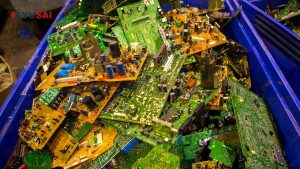
The PCB board recycling machine (also called circuit board recycling machine) is developed by combining domestic and international advanced technology, and adopts advanced physical recovery processes. It is designed to help you recover metals, resin powder and fiber powder from used printed circuit boards — such as waste computer boards, waste mobile phone boards, waste TV boards, copper-clad laminates (CCL) and PCB scraps.
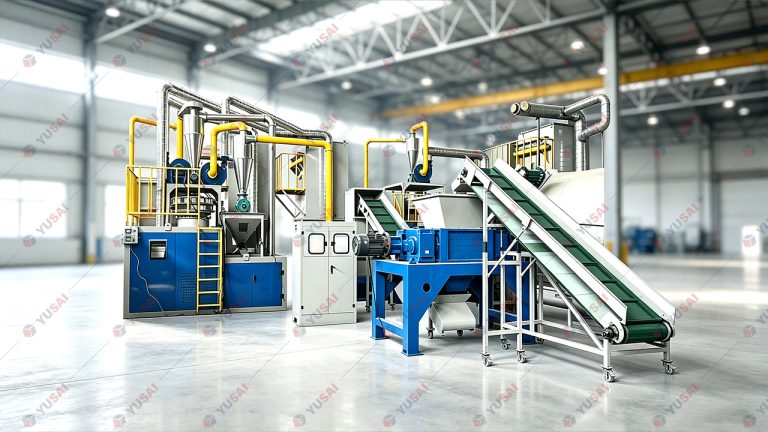
Through years of practice and theoretical analysis, we have obtained the best separation result: the separating purity can reach up to 99%, with a metal recovery rate of ≥99%. The machine separates metals from non-metals through a complete dry-type process of three-stage crushing, screening, and two-stage separation by air classification and high-voltage electrostatic separation. The whole line runs under negative pressure with pulse dust collection, ensuring a clean and dust-free working environment and compliance with environmental emission standards such as GB16297-1996.
Because of the high value of the metals, fiber and resin, this series of plants not only helps change waste into treasure, but also brings great economic benefits. The recovered metal powder (copper, gold, silver, palladium, platinum and rhodium) can be sold to smelters directly, or further refined to 99.99% pure precious metals in our downstream copper electrolysis and precious metals refining plant; the resin and fiber powder can be reused as filler materials — making the plant a zero-waste, high-return investment.
Recycling Value Analysis
Waste circuit boards are among the most valuable fractions of e-waste. A single ton of waste PCBs typically contains far more precious metal than the same weight of natural ore, which is why PCB recycling is regarded as “urban mining.”
Typical metal content of waste PCBs (industry-reported reference ranges):
- Copper (Cu) — 15–30%:main value carrier; recovered as high-purity metal powder
- Gold (Au) — 20–300 g/t:higher in computer/server/mobile boards, lower in TV/audio boards
- Silver (Ag) — 100–1,000 g/t:common in solder joints and contact surfaces
- Palladium (Pd) — 20–100 g/t:concentrated in MLCC capacitors and connectors
- Aluminum / Iron / Tin — 3–10%:separated by magnetic and density sorting
- Resin + Fiberglass — 50–70%:recycled as filler powder for building materials
Economics in brief — On a mid-grade feedstock of 1 metric ton of mixed computer/TV boards: roughly 15–20% copper plus 30–150 g/t gold, silver and palladium can be recovered. Compared with mining and smelting virgin ore, the recovery cost per unit of metal from PCBs is substantially lower, and typical payback periods reported by customers range from 6 to 18 months depending on capacity, feedstock grade and local metal prices. The non-metal powder adds an extra revenue stream instead of becoming landfill waste.
Environmental value — Proper recycling prevents heavy metals (lead, cadmium, mercury) and brominated flame retardants from contaminating soil and groundwater, avoids the carbon cost of virgin mining, and supports circular-economy compliance under the EU WEEE Directive and similar regulations.
Applicable Materials(Raw Materials & Final Products)
Raw materials that the PCB recycling machine can process:
- Waste printed circuit boards, with or without electronic components;
- CCL (copper-clad laminate) and PCB leftover material;
- Scrap circuit boards — computer boards, mobile phone boards, TV boards, communication boards, automotive electronic boards, etc.
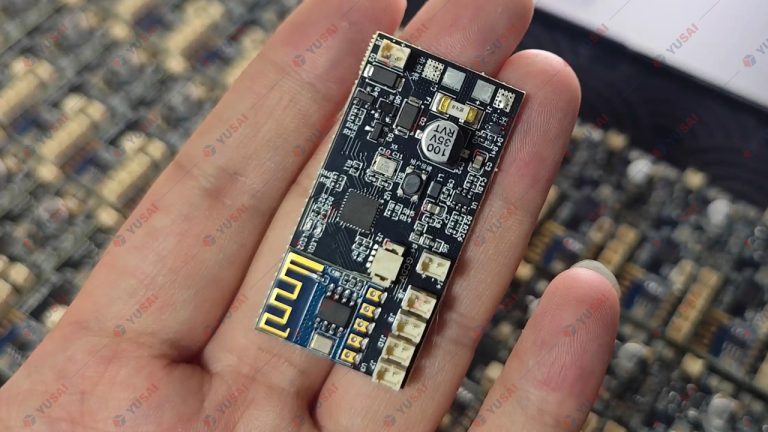
Why PCBs are recyclable — board construction in brief. A printed circuit board is a multi-layer composite: copper foil circuits laminated on an FR-4 substrate (epoxy resin + fiberglass), populated with electronic components (chips, capacitors, connectors) whose pins and solder joints carry gold, silver and palladium. Three-stage crushing liberates the copper foil and component metals from the resin/fiberglass matrix, and dry separation then recovers each fraction.
Main feedstock categories in detail:
- Computer / server motherboards (desktops, laptops, servers, data centers) — high copper density (up to 25–30%), gold-plated fingers and connectors: among the highest precious metal grade of common boards
- Mobile phone boards (smartphones, tablets, feature phones) — very high gold and palladium content per ton (MLCC capacitors, connectors, bonding wires); small size, high value density
- TV & appliance boards (TVs, washing machines, air conditioners, audio systems) — mid-grade; TV (green) boards carry solid copper value; appliance (yellow) boards lower grade but profitable in volume
- Copper-clad laminates (CCL) (PCB manufacturing offcuts, production scraps) — clean, uniform copper layer: high copper recovery with minimal contamination
- Communication boards (base stations, routers, switches, network equipment) — high-grade, often multi-layer with gold fingers
- Automotive electronic boards (ECU, dashboard, control module boards) — mixed grades; copper- and tin-rich, some palladium in connectors
- PCB scraps / leftovers (board trimmings, defective boards, mixed e-waste fractions) — already size-reduced and uniform: ideal continuous feed
- IC chips & electronic components (removed by the dismantling machine) — processed separately to recover gold bonding wires and lead frames
Feedstock conditions & preparation checklist:
- Dry only — moisture reduces separation efficiency; never feed wet or oily boards.
- Pre-dismantle large components — capacitors, chips, connectors and aluminum heat sinks should be removed with the optional PCB dismantling machine to protect the crushers and capture component-level value.
- No batteries or explosive items — batteries and charged/explosive components are strictly prohibited.
- Size limit — boards must fit the inlet; oversized frames and casings must be pre-cut.
- Flexible PCBs (FPC) are not recommended — thin flex films have low metal yield and can clog screens; this line is designed for rigid boards.
Final products:
- Mixed metal powder (copper, gold, silver, palladium, platinum, rhodium concentrate)
- Resin powder and fiberglass powder (saleable filler material)
Product Structure — Main Equipment
A complete PCB recycling line consists of the following main units (single machines also available separately):
- PCB Component Dismantling Machine (optional) — Thermocouple heating removes electronic components; flue gas treated by spray tower + photocatalytic oxidation for harmless discharge.
- Double-Shaft Shredder — The host machine uses high-quality steel welding to ensure long-term stability in heavy-duty operation. Blades are available in 9CrSi, Cr12MoV, SKD-11 and D2 alloys, customizable according to the customer’s requirements.
- Hammer Crusher — Low noise, non-pollution, high crushing ratio with uniform discharging; feed particle size adjustable, stable performance.
- High-Speed Turbine Grinder — New abrasive disk design with high capacity and good wear resistance; service life is two times longer than common abrasive disks. Water-cooled grinding chamber controls temperature and reduces noise.
- Circular Vibrating Screen + Return Loop — Large particles are recycled for second-time grinding; the feedback system makes the grinding much more effective.
- Magnetic Separator — Removes ferrous metals automatically, protecting downstream units and improving product purity.
- Air Classifier — First separation of light resin/fiber powder from heavy metal powder; air separation efficiency up to 97%.
- High-Voltage Electrostatic Separator — Separates metal and non-metal again by the second roller to improve metal purity (≥99%), effectively controlling the loss of non-ferrous metals.
- Pulse Dust Collector + Bag Dust Collector — Combined high-efficiency dust removal: dust particles larger than 0.3 µm are gathered, with dust collection efficiency up to 99%. Negative-pressure feeding prevents dust from running out.
- PLC Control System — Provides reliable and efficient control solutions to improve production efficiency, quality and safety; even feeding and coordinated operation of the whole line.
- Copper Electrolytic Refining Plant (optional) — Electrolytically refines the mixed metal powder into copper cathode and anode slime (precious metal concentrate).
- Gold Stripping Machine (optional) — Strips gold from gold-plated fingers, IC pins and connectors with stripping solution, recovering gold sponge for direct refining.
- Precious Metal Refining Plant (optional) — Refines anode slime and stripped gold into 99.99% pure gold, silver, palladium, platinum and rhodium.
Process Flow
Stage 1 — Dismantling (Optional) First, the waste circuit boards are separated into motherboards and circuit components. Electronic components are removed on the dismantling machine by thermocouple heating; the flue gas passes through a spray tower and photocatalytic oxidation system for harmless emission. Dismantled boards feed the crushing line; components can be sold or processed separately for their
Stage 2 — Dry-Type Grinding & Separating System Because of their special characteristics, the boards need the dry-type grinding and separating system. The boards are ground into a mixture powder of metal and resin fiber through three-stage crushing: whole boards → double-shaft shredder (30–50 mm) → hammer crusher (10–20 mm) → high-speed turbine grinder (powder, water-cooled grinding chamber).
Stage 3 — Screening The circular vibrating screen classifies the powder by particle size; large particles return automatically for second-time grinding.
Stage 4 — Two-Stage Dry Separation
- Air flow separation — the mixture powder is separated via the air flow system; the separating rate can be up to 97%.
- Electrostatic separation — the rest mixture is processed via the special high-voltage electrostatic separator; the machine can achieve a 99% separating rate, with a final metal recovery rate of ≥99%.
Stage 5 — Dust-Free Collection Apart from that, the fine dust is collected by the pulse dust collector, which guarantees a 99% collecting rate. All conveying runs under negative pressure, fully compliant with GB16297-1996 air emission standards.
Stage 6 — Downstream Refining (Optional, Value-Added) Mixed metal powder → copper electrolysis → copper cathode + anode slime → precious metals refining → 99.99% pure gold, silver, palladium, platinum and rhodium.
Product Features
1. Compact Structure & Low Maintenance
Compact structure, reasonable layout, stable performance and low noise; wearing parts are easy to replace.
2. PLC Intelligent Control
Coordinate operation and even feeding with PLC in the whole line; reliable and efficient control solutions improve production efficiency, quality and safety.
3. High Capacity & Water-Cooled Grinding
Large capacity up to 1,000 kg/h via the 3-stage crusher; grinder with water-cooled grinding chamber.
4. High-Purity Separation & Zero Pollution
Air flow separator with a separation rate of up to 97%; the high-voltage electrostatic separator delivers finer and more efficient separation, effectively controlling the loss of non-ferrous metals and pushing final metal purity and recovery rate above 99%.
Pulse dust collection efficiency reaches up to 99% (captures particles ≥0.3 µm); 100% dry process — no chemicals, no water, no wastewater, zero secondary pollution, compliant with GB16297-1996.
Technical Parameters
Standard line configurations(values are reference figures; final specs customized per feedstock and layout):
| Parameter | PCB-600 | PCB-1000 |
| Capacity | 500–600 kg/h | 800–1000 kg/h |
| Total Power | ~220 kW | ~335 kW |
| Dimension (L×W×H) | ~20 × 9 × 4.6 m | 20 × 15 × 4.6 m |
| Separation Purity | ≥99% | ≥99% |
Advantages
1. vs. Chemical / Hydrometallurgical Methods — Clean & Safe
- Wastewater — Dry process: none. Chemical leaching: acid/cyanide wastewater requiring treatment.
- Chemical reagents — Dry process: none. Chemical leaching: acids, cyanides (safety & permitting burden).
- Environmental compliance — Dry process: GB16297-1996 compliant, dust-free. Chemical leaching: requires effluent and gas treatment systems.
- Operation — Dry process: simple, PLC-automated, low labor. Chemical leaching: skilled chemists + strict safety protocols.
2. Performance
- 99% separation purity & ≥99% metal recovery rate — double-pass separation (air + electrostatic) minimizes metal loss.
- Up to 1000 kg/h throughput in a compact footprint; modular design allows capacity upgrades.
- PLC automation with touch-screen HMI: even feeding, coordinated line operation, low labor cost.
3. Supplier-Level Advantages
- Factory direct: 15+ years of R&D and manufacturing experience in e-waste recycling equipment; high cost-performance and fast delivery.
- Free material testing: we run your feedstock sample through the line and provide a recovery rate report before you invest.
- Complete value chain: dismantling → separation → copper electrolysis → precious metals refining, all from one supplier.
- Proven global installations: reference plants in operation across Asia, Africa, the Middle East, Europe and the Americas.
- Flexible commercial terms: FOB / CIF / DDP available; MOQ 1 set.
Quality System
- Certifications: ISO 9001 quality management system, ISO 14001 environmental management system; CE certification available upon request.
- Materials: high-quality Q235B steel frame welding for heavy-duty stability; shredder blades in hardened alloys (9CrSi, Cr12MoV, SKD-11, D2) with optional customization; national-standard motors and electrical components (PLC options from leading brands).
- Four-Stage QC: incoming material inspection → in-process component inspection → assembly inspection → 72-hour no-load test + 8-hour load test before packing.
- Shipment Acceptance: every line is test-run with video evidence; the QC report and operation video are delivered to the customer before dispatch.
Service Process
- Consultation & Material Test — Share your feedstock type, daily volume and target products. We offer free lab testing of your sample and a recovery rate report.
- Customized Solution Design — Free process flow design, equipment configuration, layout drawing and quotation tailored to your site.
- Contract & Production — Standard production lead time 15–30 working days after order confirmation.
- QC & Video Acceptance — Full-line test run with video acceptance before shipment.
- Shipping — Safe seaworthy/container packing; FOB / CIF / DDP terms supported; complete shipping documents.
- Installation & Commissioning — Engineer dispatch to your site (or remote video guidance) for installation, debugging and commissioning.
- Operator Training — Free on-site training for your operators, plus operation manuals and installation videos.
- After-Sales — 2-year warranty, lifelong technical support, spare parts supply, and regular remote check-ins.
Precautions
- Feed only dry materials — moisture reduces separation efficiency and may clog the system. Do not feed wet or oily boards.
- No batteries or explosive items — batteries, capacitors with residual charge, and sealed/explosive components must be removed before feeding.
- Pre-dismantle large components — for whole boards with heavy components (chips, connectors, aluminum heat sinks), use the dismantling machine first to protect downstream crushers.
- Uniform feeding — do not exceed the rated capacity; feed evenly to avoid jams and overload.
- Keep dust collection running — the negative-pressure system and pulse dust collector must run whenever the line operates; clean or replace filter bags as scheduled.
- Water cooling — keep the grinder’s water-circulation cooling system running to control temperature and extend grinding disc life.
- Daily inspection — check blades, screens, belts and bearings daily; replace worn wearing parts promptly (spare parts available from us).
- Electrical safety — only qualified electricians may perform maintenance; follow lockout/tagout procedures; ensure proper grounding.
- PPE for operators — dust masks and hearing protection required; operators must complete our training before independent operation.
- Feed size limit — oversized items (e.g., whole chassis or frames) must be pre-cut to the specified inlet size.
FAQ
Q1: What materials can this machine process?
A: All rigid waste printed circuit boards — computer, mobile phone, TV, communication and automotive boards, copper-clad laminates (CCL), and PCB scraps, with or without components (pre-dismantling recommended). It separates metals from non-metals and recovers copper, gold, silver, palladium, platinum and rhodium.
Q2: What is the separation purity and metal recovery rate?
A: After air classification plus high-voltage electrostatic separation, the metal separation purity reaches up to 99%, with a metal recovery rate of ≥99% — among the highest in the industry.
Q3: Does the process cause pollution?
A: No. It is a 100% dry physical process — no chemicals, no water, no wastewater. Negative-pressure conveying and a pulse dust collector (≥99% filtration, captures particles ≥0.3 µm) keep the plant dust-free and compliant with GB16297-1996 air emission standards.
Q4: What are the final products, and how do I sell them?
A: Outputs are mixed metal powder (copper/precious metal concentrate), resin powder and fiberglass powder. Metal powder is sold directly to smelters; resin/fiber powder can be sold as filler for building materials. With the optional electrolysis and refining units, you can produce copper cathode and 99.99% pure precious metals for maximum value.
Q5: How do I choose the right capacity?
A: Estimate your daily feedstock volume. Standard lines cover 200–300 kg/h, 500–600 kg/h and 800–1,000 kg/h; we can also design custom capacities. Send us your material type and volume — we will recommend the most economical configuration.
Q6: Do I need to remove electronic components before processing?
A: It is recommended. The optional PCB dismantling machine removes components safely and treats flue gas to harmless emission, protecting the crushers and improving metal recovery. We will advise based on your feedstock.
Q7: What about installation, commissioning and training?
A: We dispatch engineers to your site (or provide remote video guidance) for installation and commissioning, and give free on-site operator training, operation manuals and installation videos.
Q8: What is the warranty and after-sales support?
A: 2-year warranty, lifelong technical support, and prompt spare parts supply. Our engineers are available online for remote diagnostics.
Q9: What is the production lead time?
A: Standard production is 15–30 working days after order confirmation, plus shipping time. A full-line test run with video acceptance is delivered before shipment.
Q10: Can I test my material before buying?
A: Yes. We provide free material testing — send us a sample of your boards and we will run it through the line and share the recovery rate results with you.

Get a Free Quote
Tell us your target materials, capacity and site conditions — our technical team will design the right e-waste recycling plant for you.
- +86 18339216321
- info@yusaipreciousmetals.com
- Zhengzhou.Henan.China
If you be interested in our equipment and solutions, please to contact us.
- +86 18339216321
- info@yusaipreciousmetals.com
- zhengzhou.henan.china