
Copper Electrolytic Refining Plant
— Turnkey Copper Electrolytic Refining Plant
Product Overview
A copper electrolytic refining plant is a complete production system that upgrades impure copper — scrap copper, crude copper, blister copper, copper powder from PCB/e-waste recycling, copper sludge or anode scrap — into high-purity electrolytic cathode copper through a combination of fire refining (smelting) and electrorefining.
More than 80% of the world’s copper is produced via electrorefining, the industry-proven route that delivers the conductivity, ductility and purity demanded by electrical, electronics, automotive and construction applications. Our plant integrates the full value chain in one compact, automated line: the feed is smelted and cast into anode plates, the anodes are electrorefined in corrosion-resistant cells where pure copper deposits on the cathodes, and the impurities — including valuable gold, silver, platinum and palladium — are concentrated into anode slime for downstream precious metal recovery.
Designed for recyclers, smelters, e-waste processors and metal traders, the plant turns low-value mixed copper scrap into premium LME-tradeable cathode copper. Capacities are fully customizable from 1 t/d laboratory-scale units to 50 t/d industrial lines, with complete engineering, installation, commissioning and training included.
Recovery Value Analysis
Copper is a highly conductive, durable and infinitely recyclable metal, and its price is quoted daily on the LME. Refining scrap copper to cathode grade captures the largest part of the LME price, while the anode slime unlocks a second, often overlooked revenue stream of precious metals.
Illustrative calculation (based on LME copper ≈ US6.5/lb≈US6.5/lb≈US14,300/t as of Aug 2026 — update to current LME quotes before quoting to customers):
- Feed — 100 t/month copper powder from PCB recycling
- Feed copper content — 90% Cu
- Electrorefining recovery rate — 98%
- Cathode copper output — 100 × 90% × 98% = 88.2 t/month
- Copper revenue — 88.2 t × US14,300/t≈∗∗US14,300/t≈∗∗US1.26 million/month
- Anode slime yield — 0.5 – 1.5% of anode mass ≈ 0.5 – 1.5 t/month, containing Au, Ag, Pt, Pd
- Precious metal value — sold as concentrate or refined further; adds 5 – 20% on top of copper revenue depending on feed
- Electricity cost — ~300 kWh/t × 88.2 t ≈ 26,500 kWh ≈ US2,600/month(atUS2,600/month(atUS0.10/kWh)
- Labor — PLC automation cuts operators by up to 50% vs. conventional lines
- Typical payback — 6 – 18 months depending on capacity, feed grade and electricity price
Key value drivers:
- Purity premium — 99.99% Cu-CATH-1 cathode trades at 100% of LME copper, while scrap typically sells at a 5–10% discount; refining captures that spread.
- Precious metal bonus — 1 tonne of PCB-derived anode slime can contain hundreds of grams of gold plus silver and PGMs — revenue that is invisible in scrap sales but fully captured by this plant.
- Circular economy positioning — EU and US regulations increasingly reward traceable, recycled-content copper; refined cathode opens doors to premium buyers and green-supply-chain contracts.
- By-product chemicals — the exhaust-gas treatment system can convert NOx/acid gases into usable chemicals, and electrolyte bleed yields copper sulfate and nickel sulfate by-products, further improving project economics.
Applicable Materials
- Scrap copper (wire, millberry, chopped cable) — 90 – 99% Cu — clean, high-grade feed
- Crude / blister copper — 96 – 99% Cu — from smelting operations
- Impure / black copper — 85 – 95% Cu — requires more fire-refining
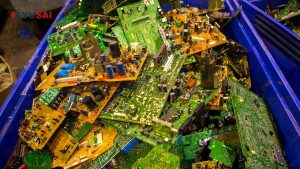
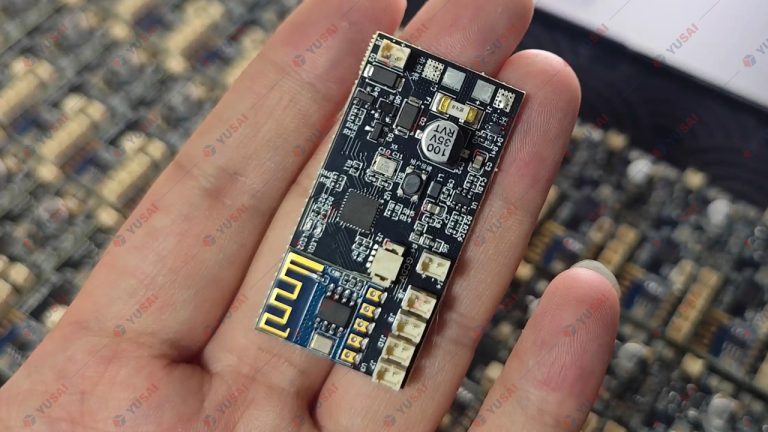
- Copper powder from PCB & e-waste recycling — 80 – 95% Cu — contains Sn, Pb, Ni, and precious metals; pulse electrolysis recommended
- Copper sludge / precipitates — 60 – 90% Cu — drying & batching pretreatment required
- Copper anode scrap & rejects — 95 – 99% Cu — direct electrorefining feed
- Copper alloy residues (after dezincing / detinning) — 80 – 97% Cu — pretreatment required
Feed with ≥ 80% Cu is recommended for economical operation; materials with high Sn/Pb/Ni or precious metal content are especially suitable because the plant captures both copper and anode-slime value.
Plant Composition — Main Equipment
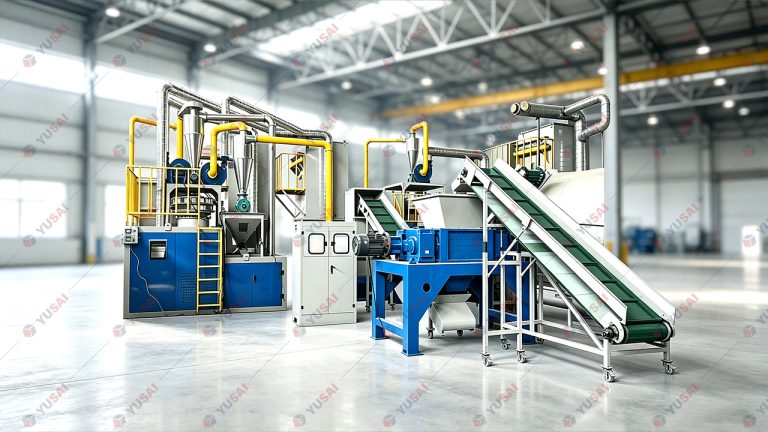
The plant is delivered as an integrated system comprising six subsystems:
1. Feed Preparation & Batching
- Dryer (optional), crusher, magnetic separator, vibrating screen and automatic batching system to condition the feed for smelting.
2. Smelting & Anode Casting
- Tilting rotary furnace or electric-arc furnace (natural gas / LPG / electric heating) with oxidation-reduction refining capability (slag removal → natural gas reduction to remove free oxygen).
- Semi-automatic anode casting mold: cast anode plates typically 10–30 mm thick; anode thickness is controlled to shorten the electrolysis cycle.
3. Electrorefining Section
- Polymer-concrete / FRP electrolytic cells with 10+ year corrosion service life.
- Anode/cathode busbars, hangers and contact system; stainless steel mother plates or starter-sheet making machine.
- IGBT digital pulse rectifier (DC output from 1,000 A to 20,000 A) with programmable pulse and automatic pole-changing to prevent anode passivation and release anode slime.
4. Electrolyte Circulation & Purification
- Circulation pumps, plate heat exchangers (heating/cooling), diatomite filters.
- Electrolyte purification unit: bleed treatment recovers copper sulfate and nickel sulfate crystals; ion-exchange option removes Sb/Bi to keep the electrolyte balanced.
5. Cathode & Anode Slime Processing
- Cathode stripping and washing machine (manual option for small plants), product inspection and packing.
- Anode slime line: washing, filtration, drying, reduction & oxidation smelting in medium-frequency furnace, water granulation — producing precious metal alloy for downstream Au/Ag/Pt/Pd refining.
6. Environmental Protection & Control
- Acid mist / NOx absorption scrubber for the electrolysis hall and smelting area.
- Wastewater collection (fluid diversion) and treatment-recycling system.
- Central PLC control cabinet: automatic current control, interlock protection, real-time monitoring, remote diagnostics.
Copper Electrolytic Refining Plant Process Flow
Incoming scrap copper, crude copper or PCB-recovered copper powder is first sorted, crushed, dried and passed through magnetic separation to remove iron inclusions, ensuring a uniform feed for stable melting. The prepared charge is melted in the refining furnace, where tin, lead, iron and aluminum are removed as slag and the melt is reduced with natural gas to control residual oxygen, producing anode-grade copper, which is then cast into anode plates of 10–30 mm thickness on a semi-automatic casting line. During electrorefining, the anodes hang in polymer-concrete cells filled with a copper sulfate–sulfuric acid electrolyte; under IGBT pulse current, copper dissolves at the anode and deposits on the cathode as 99.99% pure copper (Cu-CATH-1 / LME Grade A), while gold, silver, platinum and palladium remain undissolved and settle as anode slime. Harvested cathodes are stripped, washed and inspected before packing. In parallel, a bleed stream of the electrolyte is purified — copper sulfate and nickel sulfate are crystallized as by-products and antimony/bismuth are removed by ion exchange — then the purified solution returns to the cells in a closed loop. The anode slime is washed, dried and smelted into a precious metal alloy for downstream Au/Ag/Pt/Pd refining. Acid mist and NOx from the electrolysis hall and smelting area are scrubbed, and all wastewater is treated and recycled, so the plant operates as a closed environmental loop.

Step 1. Feed Preparation
- Objective — Sort, crush, dry and de-iron the feed to ensure uniform composition for stable smelting and downstream electrolysis.
- Main equipment — Crusher, magnetic separator, vibrating screen, dryer (optional), automatic batching scale.
- Process conditions — Feed moisture ≤ 1%; magnetic inclusion removal ≥ 95%; complete and traceable batch records.
- Control points — Sample every batch for Cu / Sn / Pb / Ni content; results drive charge blending and anode composition prediction.
Step 2. Fire Refining
- Objective — Melt the feed, remove Sn, Pb, Fe, Al and other easily oxidized impurities, and control the oxygen level to produce anode-grade copper.
- Main equipment — Tilting rotary / electric-arc furnace (natural gas, LPG or electric heating), slag raking machine, reduction gas system.
- Process conditions — Melting temperature 1,150 – 1,250 °C; oxidation blowing after slag removal to eliminate Sn/Pb/Fe; natural-gas reduction for 30 – 60 min to cut dissolved oxygen to ≤ 0.05 – 0.1%; refined copper ≥ 99.0% (feed-dependent).
- Control points — Slag basicity and viscosity control; oxidation–reduction endpoint judged by in-furnace quick spectroscopy or oxygen probe.
Step 3. Anode Casting
- Objective — Cast the refined melt into dimensionally consistent anode plates for uniform cell loading and current distribution.
- Main equipment — Semi-automatic casting machine, anode molds, cooling system.
- Process conditions — Anode thickness 10 – 30 mm; weight deviation ± 2%; surface free of slag inclusions and flash.
- Control points — Casting temperature and cooling rate to avoid hot cracking; flat, clean conductive surface at the anode lug.
Step 4. Electrorefining
- Objective — Electrochemically dissolve the anode and deposit ≥ 99.95% (typically 99.97 – 99.99%) copper on the cathode; separate impurities into anode slime and electrolyte.
- Main equipment — Polymer-concrete electrolytic cells, IGBT pulse rectifier, anode/cathode busbar system, electrolyte circulation system.
- Process conditions — Electrolyte Cu 40 – 50 g/L and H₂SO₄ 160 – 200 g/L; temperature 60 – 65 °C; current density 200 – 300 A/m² (up to 350 A/m² in pulse mode); cell voltage 0.20 – 0.35 V; current efficiency 90 – 97%; circulation 15 – 25 L/min per cell.
- Control points — Additives (glue / thiourea / Cl⁻) keep the cathode deposit smooth; pulse pole-changing prevents anode passivation and releases anode slime; weekly electrolyte assay for As / Sb / Bi / Ni, triggering purification when limits are exceeded.
Step 5. Cathode Harvesting
- Objective — Strip qualified cathode copper, then wash, inspect and pack the finished product.
- Main equipment — Cathode stripping machine (manual option for small plants), washing tank, packing machine.
- Quality standard — Cu ≥ 99.95% (typically 99.97 – 99.99%); smooth surface without nodules or entrainment; GB/T 467 Cu-CATH-1 / LME Grade A.
- Control points — Random spectral checks on cathode surface; off-grade cathodes are returned to the furnace.
Step 6. Electrolyte Purification
- Objective — Control impurity build-up, maintain the Cu / H₂SO₄ balance, and recover copper / nickel sulfate by-products.
- Main equipment — Bleed tank, evaporative crystallizer, ion-exchange column (Sb/Bi removal, optional).
- Process conditions — Periodic bleed → evaporation and crystallization to recover CuSO₄·5H₂O and NiSO₄; ion exchange when As / Sb / Bi exceed limits.
- Control points — Weekly electrolyte composition check; purified solution returns to the cells, forming a closed loop.
Step 7. Anode Slime Treatment
- Objective — Recover Au, Ag, Pt and Pd from the anode slime and convert them into saleable precious metal alloy.
- Main equipment — Slime washing tank, filter press, dryer, medium-frequency smelting furnace (reduction + oxidation smelting), water-granulation machine.
- Process conditions — Wash to remove entrained electrolyte → dry → reduction smelting to precious metal alloy → oxidation smelting for impurity removal → water granulation.
- Control points — Slime precious metal assay with custody records (anti-loss); alloy fineness check; downstream liquid extraction / separation for individual precious metals.
Step 8. Emission Treatment
- Objective — Achieve compliant discharge of acid mist and NOx, recycle wastewater, and recover by-product chemicals.
- Main equipment — Acid mist / NOx absorption scrubber, wastewater treatment & recycling system, fluid-diversion channels.
- Process conditions — Acid mist and NOx are absorbed and converted into usable chemicals; wastewater is neutralized → precipitated → filtered, then reused or discharged at standard.
- Control points — Continuous online monitoring at emission points; automatic dosing of treatment reagents (alkali, ozone).
Product Features
- Anti-passivation pulse electrolysis — the IGBT pulse automatic pole-changing system solves anode passivation on complex PCB-derived copper, keeps anode slime loose, and shortens the electrolysis cycle; timing is set and adjusted freely via the control cabinet.
- 99.99% (4N) cathode purity — output meets Cu-CATH-1 (GB/T 467) and LME Grade A, suitable for oxygen-free copper rod, wire, busbar and tube production.
- High current efficiency — 90–97% with optimized electrolyte management and temperature control, keeping specific power consumption at 200–400 kWh/t.
- Corrosion-resistant cells — polymer-concrete / FRP electrolytic cells resist sulfuric acid electrolyte for a service life above 10 years with minimal maintenance.
- High automation, low labor — PLC-controlled current, temperature and circulation with automatic interlocks; labor cost reduced by up to 50% compared with conventional processes.
- Modular, compact footprint — subsystems are skid-mounted and modular; layout is customized to your existing workshop, and small-capacity plants fit into standard industrial sheds.
- Closed-loop environmental protection — acid mist and NOx are absorbed and converted into usable chemicals; electrolyte bleed yields copper/nickel sulfate by-products; wastewater is treated and reused — all discharge meets local standards.
- Precious metal co-recovery — integrated anode slime line extracts Au/Ag/Pt/Pd value that other processes lose.
- Customizable scale — from 1 t/d pilot plants to 50 t/d industrial lines, with the specific equipment configuration determined by your output target.
- Field-proven worldwide — installations delivered to recyclers and smelters across Asia, Africa, the Middle East and Latin America, with 24/7 online support.
Technical Parameters
1. Standard Electrorefining Process Parameters
| Parameter | Value |
| TProduct purity | ≥ 99.95%, typical 99.97 – 99.99% (Cu-CATH-1 / LME Grade A) |
| Feed copper content | ≥ 80% (recommended) |
| Electrolyte composition | CuSO₄ + H₂SO₄; Cu 40 – 50 g/L; H₂SO₄ 160 – 200 g/L |
| Electrolyte temperature | 60 – 65 °C |
| Current density | 200 – 300 A/m² (up to 350 A/m² with pulse mode) |
| Cell voltage | 0.20 – 0.35 V |
| Current efficiency | 90 – 97% |
| Specific power consumption | 200 – 400 kWh per tonne of cathode copper |
| Cathode cycle time | 7 – 14 days (per cathode cycle) |
| Anode thickness | 10 – 30 mm (semi-automatic mold casting) |
| Electrolyte additives | Glue / thiourea / chloride ion (for smooth cathode deposit) |
| Electrolytic cell material | Polymer concrete / FRP (service life > 10 years) |
2. Model & Capacity Table
| Model | Capacity (t/d) | Cells / Series | Rectifier Output | Installed Power | Workshop Area (m²) |
| CER-1 | 1 | 4 – 6 | 1,000 A | ~80 kW | 120 |
| CER-3 | 3 | 8 – 12 | 3,000 A | ~200 kW | 250 |
| CER-5 | 5 | 12 – 18 | 5,000 A | ~320 kW | 400 |
| CER-10 | 10 | 20 – 30 | 10,000 A | ~600 kW | 700 |
| CER-20 | 20 | 36 – 50 | 15,000 A | ~1,100 kW | 1,200 |
Advantages
- One-stop turnkey responsibility — engineering design, manufacturing, installation, commissioning and training from a single supplier; no interface disputes between equipment vendors.
- Free raw material testing — send us a sample of your scrap; our lab returns copper and precious metal content plus a recommended process flow and ROI analysis before you commit.
- Tailored to your feed — process flow and equipment configuration are designed around your raw material chemistry (high Sn/Pb, PCB-derived powder, alloy residues), not a one-size-fits-all line.
- Pulse electrolysis technology — a differentiator for recyclers: it runs reliably on complex, high-impurity PCB anodes where conventional DC electrolysis fails from passivation.
- Two revenue streams — copper cathode plus anode-slime precious metals; total project IRR is typically far higher than copper-only calculations suggest.
- Compliance-ready — tail gas and wastewater systems are engineered to meet local environmental standards, protecting you from shutdown risk and enabling green-supply-chain premiums.
- Global delivery experience — engineers available for on-site installation worldwide; remote commissioning support with real-time video guidance.
- Honest after-sales — spare parts supplied at cost price, 24/7 online service, lifetime technical consultation and annual maintenance visits.
Quality System
- ISO 9001:2015 quality management system covering design, manufacturing and after-sales.
- CE certification on electrical and control systems.
- Incoming material inspection — electrolytic cell resins, titanium/copper busbars, rectifier modules and structural steel are batch-tested before assembly.
- In-factory assembly & test run — every plant is fully assembled and run under load for {{N}} hours in our workshop before disassembly for shipping.
- Pre-shipment inspection — third-party inspection (SGS/BV/CCIC or your appointee) welcomed; inspection reports, test certificates and material certificates supplied.
- Complete documentation — process drawings, PID diagrams, electrical wiring diagrams, operation & maintenance manuals, and spare parts lists in English (other languages on request).
- Traceability — each component batch is traceable; a spare-parts kit accompanies every shipment.
Service Process
1. Inquiry & Sample Testing Share your raw material (send a sample) → free lab test → copper & precious metal content report.
2. Solution Design & Quotation Capacity confirmation, process flow design, workshop layout, ROI analysis, formal quotation.
3. Contract & Production Design review, manufacturing (typically 30 – 60 days), progress photos & videos delivered to you.
4. Quality Inspection & Shipping In-factory test run, pre-shipment inspection, seaworthy export packing, ocean/air freight booking.
5. Installation & Commissioning Our engineers go to your site (or remote video guidance) for installation, commissioning and first production.
6. Training Operator & maintenance training: process operation, electrolyte management, safety procedures.
7. After-Sales 24/7 online support, spare parts at cost, remote diagnostics, annual service visit, process optimization consultation.
Safety & Precautions
Chemical safety
The electrolyte contains 160–200 g/L sulfuric acid plus copper sulfate at 60–65 °C. Operators must wear acid-proof gloves, goggles, apron and boots; provide emergency showers and eyewash stations adjacent to the electrolysis hall.
Never add water directly to concentrated acid or electrolyte; always follow the dilution procedure in the manual.
Electrical safety
The rectifier delivers high DC current; only qualified electricians may access the power room. Use lockout/tagout before maintenance. Keep busbars covered and insulated.
Ventilation
Acid mist and nitrogen oxides are generated at the cells and furnace. Always run the scrubber during operation; never bypass the exhaust system.
Electrolyte management
Maintain Cu 40–50 g/L, H₂SO₄ 160–200 g/L and 60–65 °C; monitor additives (glue/thiourea/chloride) to ensure smooth cathode deposits and avoid nodular growth and short circuits.
Do not exceed the rated current density — it causes anode passivation, impure deposits and higher energy consumption.
Anode slime handling
Anode slime contains precious metals; collect, wash and store it in a locked, dedicated area with clear custody records to prevent loss.
Startup & shutdown
Pre-heat electrolyte to operating temperature before loading current; follow the prescribed startup/shutdown sequence to avoid thermal shock to cells and thermal cracking of anodes.
Wastewater
Never discharge untreated electrolyte or slime wash water; route all streams through the fluid-diversion system to wastewater treatment per local regulations.
FAQ
Q1. What raw materials can a copper electrolytic refining plant process?
A. Scrap copper, crude/blister copper, impure copper, copper powder from PCB and e-waste recycling, copper sludge and anode scrap — typically with ≥ 80% copper content. We design the process around your specific feed.
Q2. What purity can the plant achieve?
A. Minimum 99.95%, typically 99.97–99.99%, meeting Cu-CATH-1 (GB/T 467) and LME Grade A — suitable for oxygen-free copper rod, wire, busbars and tubes.
Q3. Can precious metals be recovered from anode slime?
A. Yes. Au, Ag, Pt and Pd in the raw copper concentrate in the anode slime, which is washed, smelted and refined into precious metal alloy — an additional revenue stream beyond the cathode copper.
Q4. What is the difference between electrorefining and electrowinning?
A. Electrorefining purifies copper anodes (impure copper dissolves, pure copper deposits; impurities fall as slime). Electrowinning extracts copper from solution (e.g. CuSO₄ leach liquor) onto a cathode. Scrap-based refining uses electrorefining; SX-EW operations use electrowinning. We supply both.
Q5. What capacities are available?
A. Custom from 1 t/d to 50 t/d. The equipment configuration — number of cells, rectifier rating, furnace size — is determined by your target output and raw material.
Q6. Why is pulse / pole-changing electrolysis recommended for PCB-derived copper?
A. PCB-derived copper contains high levels of tin, lead, nickel and precious metals. Under conventional DC electrolysis these impurities can passivate the anode and stop the reaction. The IGBT pulse automatic pole-changing system keeps the anode active and the slime loose, enabling stable long-term operation.
Q7. How long does installation and commissioning take?
A. Typically 2–4 weeks on site plus 1–2 weeks of training, after a project lead time of 45–90 days from order to delivery, depending on capacity and site readiness.
Q8. How are waste gas and waste liquid handled?
A. Acid mist and NOx are scrubbed in absorption towers (and can be converted into usable chemicals); electrolyte bleed is purified to recover copper and nickel sulfate; wastewater is treated and recycled. The plant is designed to meet local environmental discharge standards.
Q9. What is the typical payback period?
A. Usually 6–18 months depending on feed grade, capacity, electricity price and LME copper price. We provide a free ROI analysis from your raw material sample before purchase.
Q10. Do you provide raw material testing before purchase?
A. Yes — free of charge. Send a sample; we return the copper and precious metal assay plus a recommended process flow and ROI projection.
Q11. What certifications does the plant carry?
A. The plant is manufactured under an ISO 9001:2015 quality system; electrical/control systems are CE certified, and third-party pre-shipment inspection (SGS/BV/CCIC) is available on request.
Q12. How much electricity does the plant consume?
A. Approximately 200–400 kWh per tonne of cathode copper at a current efficiency of 90–97%, plus furnace fuel/electricity for smelting — an exact figure depends on your feed and capacity.

Get A Free Quote
with your raw material details and target capacity for a free test report, process design and ROI analysis.
- +86 18339216321
- info@yusaipreciousmetals.com
- Zhengzhou.Henan.China
If you be interested in our equipment and solutions, please to contact us.
- +86 18339216321
- info@yusaipreciousmetals.com
- zhengzhou.henan.china