How to Select PCB Recycling Equipment: A Buyer’s Pitfall‑Avoidance Guide
For international recyclers and project investors, selecting printed‑circuit‑board (PCB) recycling production lines is far more than comparing prices and brochure‑stated capacity. Feedstock variety, regional environmental legislation, equipment certification, mechanical reliability, after‑sales support and even EPC project execution capability will directly determine whether your plant can run stably and profitably. This practical guide covers dry‑process physical separation, hydrometallurgical refining boundaries, cross‑border procurement risks, contract acceptance standards and global regulatory reminders, helping you avoid costly common traps.
1. Confirm Your Business Position & Choose Appropriate Process Route
Two major technical paths exist for waste‑PCB resource recovery: dry physical separation lines and hydrometallurgical / electrolytic precious‑metal refining systems. Their applicable scenarios and regulatory risks differ significantly.
Dry Physical Recycling Line (Preferred for most pre‑processing recyclers)
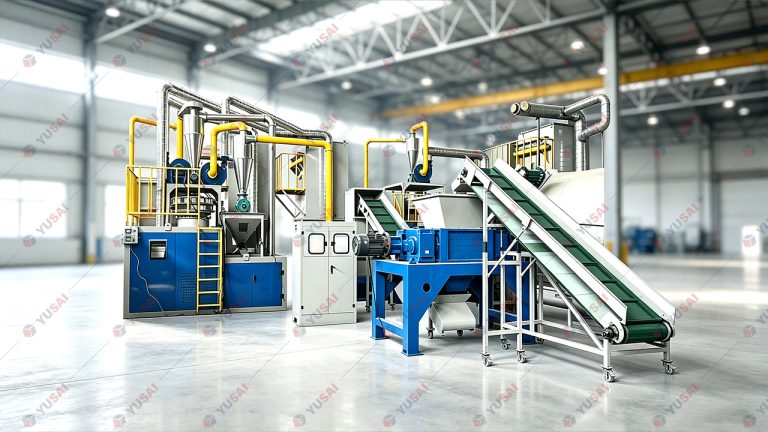
Standard full dry‑process configuration: pre‑heating / component‑desoldering unit (optional for component‑loaded boards) → primary shredder → secondary fine crushing → magnetic separation → gravity‑air classification → high‑voltage electrostatic separator (core unit) → fully‑enclosed negative‑pressure pulse dust‑collection system, plus conveying, screening and electric control modules.
- Advantages: No wastewater generation, lower environmental‑approval barriers; copper recovery rate normally reaches 95%‑98%, copper‑granule purity 97%‑99%; resin powder by‑product can be sold externally.
- Limitation: Ultra‑fine precious‑metal fractions (<0.1 mm) have partial material loss. Enriched electronic components should be collected separately and delivered to licensed precious‑metal refineries for further treatment.
Capacity reference (calculated with clean bare PCBs, moisture ~8 %):
- Small‑scale: 300‑500 kg/h, for pilot or low‑volume operations; fine‑particle loss relatively higher.
- Medium‑scale: 800‑1 500 kg/h, mainstream global configuration with stable metal‑recovery performance.
- Large‑scale: above 2 t/h, oriented to formal solid‑waste disposal enterprises with high‑level automation.
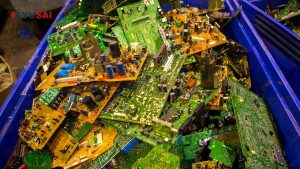
Critical note: Catalog‑labelled capacity is measured under ideal bare‑board test conditions. If your feedstock contains mixed components, damp boards, capacitors or multi‑layer thick boards, real‑world throughput often drops to 60‑70 % of nominal value.
Hydrometallurgical & Electrolytic Refining Systems
Hydrometallurgical purification, electrolytic cells for gold, silver, platinum‑group and scattered metals (indium, tellurium, gallium etc.) deliver high‑purity precious‑metal output. However, these systems belong to hazardous‑waste metallurgical processing.
- You must hold valid local hazardous‑waste processing permits before deploying hydrometallurgical leaching or integrated chemical‑extraction units.
- In most regions including EU member states, North America and many Southeast‑Asian jurisdictions, standalone “on‑site PCB gold‑leaching all‑in‑one machines” cannot pass environmental assessment.
- Recommended workflow: use dry physical lines for pre‑separation; send high‑value enriched component fractions to qualified metallurgical plants equipped with complete NOₓ exhaust‑gas treatment and waste‑liquid handling infrastructure for hydrometallurgical refining and electrolysis.
Avoid wet gravity‑only separation lines unless you possess complete closed‑loop wastewater and sludge‑treatment facilities; water‑scarce territories generally discourage such solutions.
2. Key Technical Indicators to Evaluate (Must be written into purchase contracts)
Oral marketing promises carry no weight. Lock these measurable metrics in formal agreements, and take third‑party laboratory testing as acceptance basis.
- Metal recovery rate & product purity For mature dry‑process lines, comprehensive copper recovery ≥95 % (excellent equipment ≥98 %), copper‑granule purity ≥97 %. Require vendors to run continuous on‑site trials using your actual mixed incoming scrap, not pre‑selected clean demonstration‑grade boards. Sample material should be retained for independent third‑party assay. Minimum trial runtime: 60 consecutive minutes.
- Power consumption per ton of feedstock For medium‑size complete dry lines (excluding desoldering furnace), typical energy consumption ranges 0.25‑0.35 kWh per kilogram of PCB feed. High‑voltage electrostatic separation consumes the largest share of electricity; be cautious of unrealistically low‑power marketing claims.
- Dust containment, sealing and noise control Full negative‑pressure closed design is mandatory. Equip pulse bag‑house dust collectors; for EU, US and high‑standard emerging markets, add activated‑carbon adsorption and continuous on‑line dust‑emission monitoring. Crushing chambers cannot remain open‑type. Noise‑reduction bases or acoustic enclosures are frequently required to satisfy local environmental‑authority limits.
- Wear‑part specifications & spare‑part supply High‑chromium / H13 alloy hammers, liners, electrostatic separator rollers, screens and belts are high‑frequency consumables. Clarify material grades, unit prices and delivery lead‑times. Prioritize equipment adopting internationally‑standard PLC, frequency‑converter brands, so spare components can be sourced locally overseas. Avoid proprietary locked spare‑part ecosystems.
- Electrical safety & interlock protection High‑voltage electrostatic cabins must install safety‑door interlocks, auto power‑cut‑off mechanisms and reliable grounding protection. Emergency‑stop chains and overload protection shall be fully implemented. For cross‑border projects, confirm voltage‑frequency adaptation (50 Hz / 60 Hz, 400 V / 415 V three‑phase supply) before shipment; mismatched frequency will degrade separator performance severely.
3. Top Procurement Pitfalls for Global Buyers
Pitfall 1: Inflated nominal capacity & misleading demo‑material testing
Vendors often run demos with perfectly‑dried bare PCBs. Once your mixed, damp, component‑rich scrap is fed in, throughput collapses, metal mixes heavily into resin powder and recovery figures plummet. ✅ Countermeasure: Insist on trials with your real‑world feedstock; tie acceptance and final‑payment conditions to third‑party assay results.
Pitfall 2: Cutting the high‑voltage electrostatic separator to reduce quotation
Some low‑cost configurations retain only gravity‑air classification. Fine copper particles escape entirely into resin‑powder by‑products, generating massive ongoing revenue loss. ✅ Countermeasure: For PCB recycling projects, high‑voltage electrostatic separation cannot be removed from core configuration.
Pitfall 3: Selling integrated chemical leaching units without emphasizing permit obligations
Suppliers may market “all‑in‑one precious‑metal recovery machines”, while omitting warnings about hazardous‑waste‑licence legal requirements. Unauthorized chemical leaching leads to heavy fines, plant shutdown and legal liability under Basel‑Convention‑aligned national laws. ✅ Countermeasure: Keep physical pre‑processing and hydrometallurgical refining separated; reserve leaching‑electrolysis workflows only for licensed refineries.
Pitfall 4: Equipment supplied without complete compliance documentation
Many manufacturers deliver machines only with domestic‑market certificates, lacking CE, UL or regional conformity documents and full‑set English‑language engineering files (mechanical drawings, electrical schematics, noise‑emission calculation reports, mass‑balance material‑flow documentation). Without these, you may fail permit application or face cargo detention at seaports. ✅ Countermeasure: Clearly specify required certificates issued by authorized notified‑bodies in contracts; deliver all technical documentation before shipment. The mass‑balance report (input PCB weight vs output copper, iron, resin powder, hazardous‑enriched fractions) is essential for environmental‑authority reviews overseas.
Pitfall 5: Quotation omissions and hidden extra‑cost items
Initial offers may cover only main machines, excluding conveyors, dust‑treatment systems, control cabinets, installation labour, commissioning, training, freight and necessary regional‑standard electrical retrofits. Additional charges appear after order confirmation. ✅ Countermeasure: Request itemized turnkey‑scope FOB quotations. Distinguish standard‑scope items and optional upgrades (certification modification, acoustic housing, monitoring modules, spare‑part kits).
Pitfall 6: Under‑estimating overseas after‑sales complexity
Domestic‑market service teams can arrive quickly; international on‑site commissioning requires visa arrangements, long lead‑times and travel‑cost planning. Remote support alone cannot resolve hardware breakdowns. ✅ Countermeasure: Order a complete initial wear‑part spare‑parts kit together with main equipment. Define response time, travel‑cost allocation and on‑site commissioning scope within contracts. Require multilingual operation‑maintenance manuals and instructional‑video resources.
Pitfall 7: Confusing equipment export with waste‑import licensing rights
Suppliers sometimes imply “buying our line grants you rights to import waste‑PCB feedstock”. Equipment export and transboundary e‑waste movement are two independent matters. Under the Basel Convention, cross‑border shipments of waste‑PCB require the PIC (Prior Informed Consent) procedure. Feedstock import permits are the buyer’s full responsibility, not equipment‑vendor obligations. ✅ Countermeasure: Secure local solid‑waste / e‑waste processing approvals and feed‑stock import quotas before placing equipment orders.
Pitfall 8: Second‑hand equipment risks
Used lines frequently suffer degraded electrostatic‑roller insulation, worn crushing‑chamber liners and exhausted dust‑collector bags, resulting in poor separation and heavy dust emissions. Spare‑part availability may vanish. ✅ Countermeasure: Always conduct full‑feedstock trial runs before purchasing second‑hand units; verify component condition and spare‑part supply channels.
4. Vendor Assessment & Critical Contract‑Acceptance Checklist
Pre‑order supplier evaluation points
- Request references of running overseas PCB‑recycling projects; if feasible, arrange site visits to operating facilities instead of only viewing showroom prototypes.
- Verify project experience in EPC turn‑key delivery for solid‑waste or precious‑metal‑refining plants. Confirm capacity to deliver auxiliary environmental systems such as NOₓ exhaust‑gas treatment.
- Clarify warranty scope (minimum 1‑year warranty for main frame; wear‑parts excluded), remote‑support mechanism and overseas‑engineer deployment terms.
Must‑include contract clauses
- Defined feed‑stock conditions, guaranteed hourly throughput, copper‑recovery‑rate and‑purity acceptance criteria; third‑party‑assay acceptance rules.
- Acceptance workflow: consequences for non‑compliant performance; milestone payment terms (example: 30 % advance deposit, partial payment before shipment; withhold final payment until successful commissioning and full documentation hand‑over completed). Avoid full‑advance‑payment arrangements.
- Warranty duration, fault‑response time, on‑site‑service expense allocation, detailed wear‑parts list with unit pricing.
- Full‑deliverable list: mechanical‑electrical drawings, operation‑maintenance manuals, compliance‑certificate copies, material‑mass‑balance template, factory test reports.
5. Regional Regulatory Reminders for International Projects
- EU Region: Comply with WEEE Directive and Basel‑Convention PIC rules. Mandatory CE certification (MD, LVD, EMC directives). Resin‑fraction downstream‑utilization contracts are often requested. On‑site chemical leaching is almost unobtainable for ordinary recyclers.
- North America: State‑level RCRA hazardous‑waste regulations apply; UL/NEC‑standard electrical systems preferred. Secure solid‑waste‑processing permits before equipment arrival.
- Southeast‑Asia: E‑waste‑import quotas are tightening year‑by‑year. Even dry‑process lines need sufficient dust‑abate hardware; simplified low‑budget solutions face high shutdown risk.
- Middle East & Africa: Confirm regional mandatory conformity certifications (e.g. SABER). Prioritize processing locally‑generated e‑waste; illegal imported scrap may trigger plant seizure regardless of equipment performance.
6. Final Quick‑Selection Summary
- For recyclers focusing on copper‑granule output: deploy complete dry‑process physical lines: shredding‑crushing‑magnetic‑gravity‑high‑voltage‑electrostatic separation plus sealed negative‑pressure dust‑collection. Never remove electrostatic separation for cost saving.
- If high‑purity gold, silver, PGM and scattered‑metal refining is required: separate physical pre‑treatment from hydrometallurgical‑electrolytic refining; reserve hydrometallurgical modules only for licensed refineries with complete exhaust‑gas and wastewater‑treatment infrastructure.
- For any cross‑border investment: validate local permits first; test equipment using your real feed‑stock; lock acceptance indicators and full documentation delivery within contracts.