Top 10 Common Electronic Components & Introduction
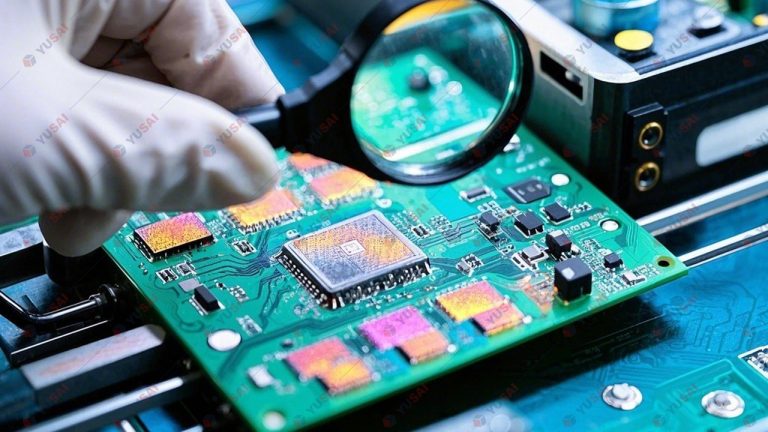
Electronic devices have become an indispensable part of modern daily life. The electronic components used inside largely determine the performance and functions of electronic equipment. Therefore, mastering the characteristics and applications of common electronic components is essential for electronic engineers and electronics enthusiasts.
In this article, we will introduce ten widely used electronic components, including resistors, capacitors, inductors, diodes, transistors, triodes, relays, integrated circuits, sensors and transformers, together with their features and typical applications.
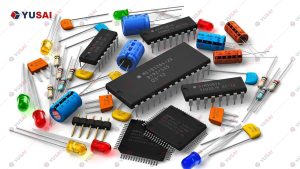
Resistors
A resistor is a widely used passive component in electronic circuits. It functions to limit current, divide voltage and realize power matching in circuits. According to raw materials, manufacturing processes and application scenarios, resistors are categorized as below:
- Carbon Film Resistor: A common low-power resistor. A carbon film is deposited on a ceramic or glass tube, then cut and drilled to form different resistance values. It features low cost and good stability, suitable for signal conditioning and bias circuits in general electronic circuits.
- Metal Film Resistor: High-precision resistor. A thin metal film is coated on ceramic or glass substrates and etched to get target resistance. It has high accuracy and excellent stability, ideal for comparison and calibration in precision circuits.
- Metal Oxide Resistor: High-power resistor using metal oxide ceramic substrate. A thin metal foil layer is formed and etched on the substrate. It can withstand high power with stable performance, applied in power supplies and motor drive circuits.
- Potentiometer: An adjustable resistor equipped with a rotary knob, fixed terminals and a sliding contact. Rotating the knob changes the position of the sliding tap and adjusts resistance. It is used to tune signal level, brightness and other adjustable parameters in circuits.
Capacitors
Capacitors are passive components widely adopted in electronic circuits, used for charge storage, filtering and signal coupling. Main types by material, structure and application:
- Ceramic Capacitor: Popular low-capacitance component made with ceramic dielectric and metal electrodes. It can endure high temperature and high voltage, stable and low-cost, widely used for filtering and coupling in ordinary circuits.
- Electrolytic Capacitor: High-capacity capacitor constructed with aluminum foil and electrolyte. It delivers large capacitance and voltage rating, while its frequency response is limited and sensitive to temperature and humidity. Commonly used in power supplies and amplifiers.
- Metallized Film Capacitor: Using metal thin film as electrodes. It offers high precision, great stability and favorable frequency response, used for filtering, comparison and calibration in high-performance circuits.
- Varactor Diode (Variable Capacitance Diode): A semiconductor component with variable capacitance. Its capacitance changes with reverse/forward bias voltage, applied in frequency tuning and oscillation circuits.
Inductors
Inductors store magnetic field energy and induce voltage, which are critical parts of electronic circuits. Common types:
- Wound Coil Inductor: The most common type, windings wrapped on magnetic or non-magnetic cores to store and release current and magnetic field. It has high inductance, low DC resistance and stable performance for filtering, coupling and compensation.
- Magnetic Core Inductor: Windings wound on magnetic materials. Features high inductance, good stability and low resistance, widely used in high-frequency and RF circuits.
- Chip Inductor: Inductor fabricated on chips. Small size, lightweight, stable performance and good frequency response, designed for integrated circuits and mobile communication devices.
Diodes
Diode is a basic semiconductor component. Major types:
- Silicon Diode: Made of silicon semiconductor, the most common diode for rectification, current limiting and switching circuits.
- Germanium Diode: Semiconductor diode with germanium material. Compared with silicon diodes, it has lower noise and higher sensitivity but narrower application range.
- Schottky Diode: Ultra-fast recovery diode, used in high-frequency circuits and modems.
- LED (Light Emitting Diode): Converts electric energy into light energy, widely used in lighting, display and communication fields.
- Photodiode: Converts optical signals into electrical signals, commonly used in photoelectric sensors and photoelectric switches.
Other special diodes include Zener diodes, TVS diodes and more.
Transistors
Transistors are semiconductor devices working as amplifiers or electronic switches.
- NPN Transistor: Consists of two N-type semiconductors sandwiching one P-type semiconductor. Current flows from emitter to collector when sufficient voltage is applied to the base, realizing amplification or switching.
- PNP Transistor: Two P-type semiconductors sandwich one N-type semiconductor. It turns on when the base voltage drops to a certain level and conducts current from emitter to collector for amplification and switching.
- MOSFET (Metal-Oxide-Semiconductor Field-Effect Transistor): Features high input impedance, low noise and low power consumption, classified into N-MOS and P-MOS for different circuit requirements.
- JFET (Junction Field-Effect Transistor): Constructed with PN junction. Low noise, low distortion and high input impedance, suitable for low-noise amplifiers and high-sensitivity sensors.
Triodes
Triode is a semiconductor device made of three differently doped semiconductor regions:
- NPN Triode: Two P regions sandwich one N region. Widely used for signal amplification and switching.
- PNP Triode: Two N regions sandwich one P region. Its current direction and voltage polarity are opposite to NPN type, also used for amplification and switching.
- IGBT (Insulated Gate Bipolar Transistor): Equipped with insulated gate and three PN junctions. Designed for high-voltage & high-current switching applications, with low switching loss and good high-frequency response.
Special devices like FETs are also in this category.
Relays
Relay is an electrical control component assembled with electromagnet, contact points and springs. It uses small control voltage/current to switch high-current or high-voltage circuits for control and protection.
- Electromagnetic Relay: Built with electromagnet and contacts, used for motor control, lighting control and security systems with high voltage & large current.
- Solid State Relay (SSR): Fully solid-state without moving mechanical parts. Fast response, long service life and low noise, applied in CNC machines and automatic production lines.
- Thermal Relay: Composed of heating elements and contacts, for overload protection and temperature monitoring of motors and transformers.
- Time Delay Relay: Integrated timing circuit and contacts, used for timing, delay and cycle control of lighting, air conditioners and automatic drainage systems.
- Protection Relay: Deployed in power systems to protect equipment and circuits against overload, short circuit and ground faults.
Integrated Circuits (IC)
An Integrated Circuit (IC) integrates numerous electronic components including transistors, capacitors and resistors onto a single chip. Classified by integration scale:
- SSI (Small-Scale Integration): Small-scale IC with dozens of logic gates such as AND, OR and NOT gates.
- MSI (Medium-Scale Integration): Medium-scale IC with hundreds of logic gates, e.g. counters and multiplexers.
- LSI (Large-Scale Integration): Large-scale IC containing thousands of logic gates, including microprocessors and memory chips.
- VLSI (Very-Large-Scale Integration): Very large-scale IC with hundreds of thousands to millions of logic gates, such as microprocessors, DSP and FPGA.
- ULSI (Ultra-Large-Scale Integration): Ultra large-scale IC with millions to tens of millions logic gates, used for high-speed processors, image processors and large-capacity memory.
Special ICs include analog ICs, DSP and RFIC.
Sensors
Sensors convert non-electrical signals (physical, chemical or biological quantities) into electrical signals. Common types:
- Photoelectric Sensor: Measures light intensity and distance by photoelectric effect, used in automatic production lines and industrial robots.
- Temperature Sensor: Detects temperature, widely used in air conditioners, refrigerators and automobiles.
- Humidity Sensor: Measures ambient humidity for meteorology, environmental protection and agriculture.
- Pressure Sensor: Detects pressure and weight, applied in automotive and industrial automation.
- Accelerometer: Captures acceleration signals, adopted in smartphones and fitness bands.
- Gyroscope: Measures angular velocity, used in drones and aerospace equipment.
- Magnetic Sensor: Detects magnetic field for navigation and vehicle positioning.
- Biosensor: Collects biological signals like blood glucose and heart rate for medical diagnosis and health monitoring.
Other types include acoustic sensors, gas sensors and chemical sensors.
Transformers
Transformers change voltage level relying on electromagnetic induction.
- Power Transformer: For voltage conversion in power grid, including transformers and instrument transformers.
- Signal Transformer: Used for audio and communication signal transmission, with air core or iron core windings.
- Isolation Transformer: Isolates power supply and load to block electric noise and interference.
- Autotransformer: Single winding structure. Different wiring taps realize different voltage transformation ratios.
- Inductive Coupler: Special transformer for RF signal coupling and isolation.
- High Power Transformer: Applied in high-power power supply and drive systems, featuring high efficiency and high temperature resistance.
- Electronic Transformer: Mini transformer in electronic circuits with laminated or spiral windings, for signal coupling, isolation and impedance matching.
Closing
Each electronic component has unique characteristics and functions. During circuit design and assembly, engineers need to select and combine proper components according to design targets and application requirements.
Why This Matters for Waste PCB Recycling
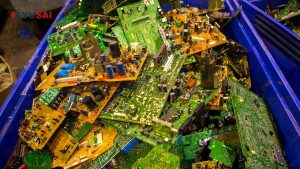
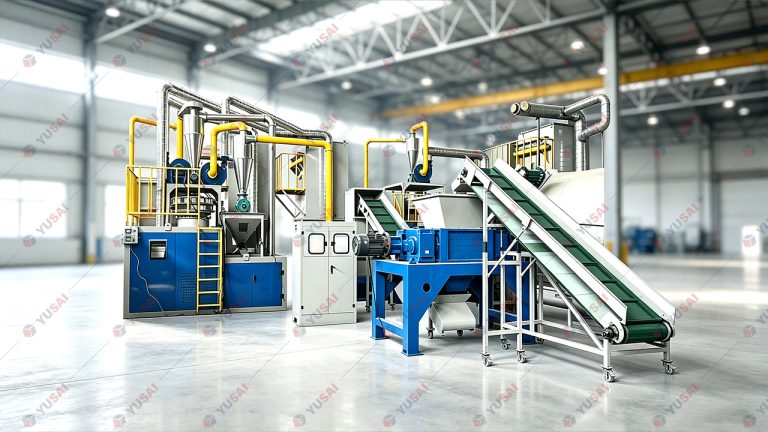
A large number of these valuable electronic components are mounted on waste printed circuit boards (WPCBs). Our waste circuit board recycling production line can effectively crush, separate and recover precious metals, copper and other valuable materials from scrap PCBs, realizing resource recycling and environmental protection.
Our complete recycling equipment can process waste circuit boards, dismantle and separate various electronic components, and extract recyclable metals efficiently. If you are looking for reliable PCB recycling machinery, welcome to contact us for more details and technical solutions.