Introduction
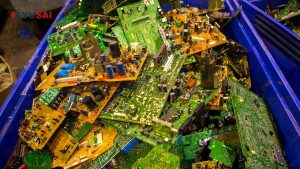
The fast‑growing volume of electronic waste has made waste printed circuit boards (WPCBs) one of the most challenging recycling feedstocks worldwide. Besides copper, gold and silver, waste PCBs contain roughly 2 wt%‑2.3 wt% solder tin with remarkable economic value. Efficient tin recovery not only unlocks extra revenue for e‑waste recyclers but also improves subsequent recycling performance of copper and precious metals.
Traditional tin‑recycling solutions have obvious drawbacks. Molten‑salt melting only fits single‑sided PCBs, releases toxic fumes and leaves residual solder stuck on bare boards, resulting in low recovery yield. Acid‑based chemical stripping consumes expensive reagents, generates large volumes of wastewater and produces tin hydroxide that needs complicated secondary processing.
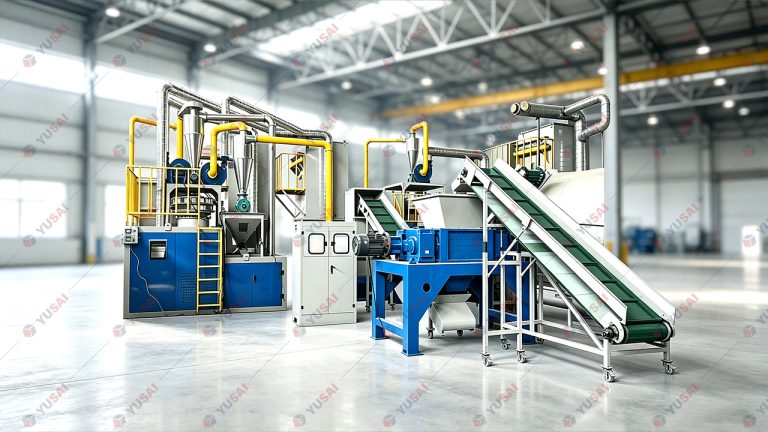
Our patented alkaline electrolysis recycling technology addresses those pain points. It separates solder‑bearing mixed metal powder from waste PCBs, then selectively extracts metallic tin via alkaline electrolysis. Sponge tin obtained can be directly cast into tin ingots with high purity, while electrolyte can be recycled for continuous production, achieving both high recovery rate and eco‑friendly operation.
Core Process Workflow
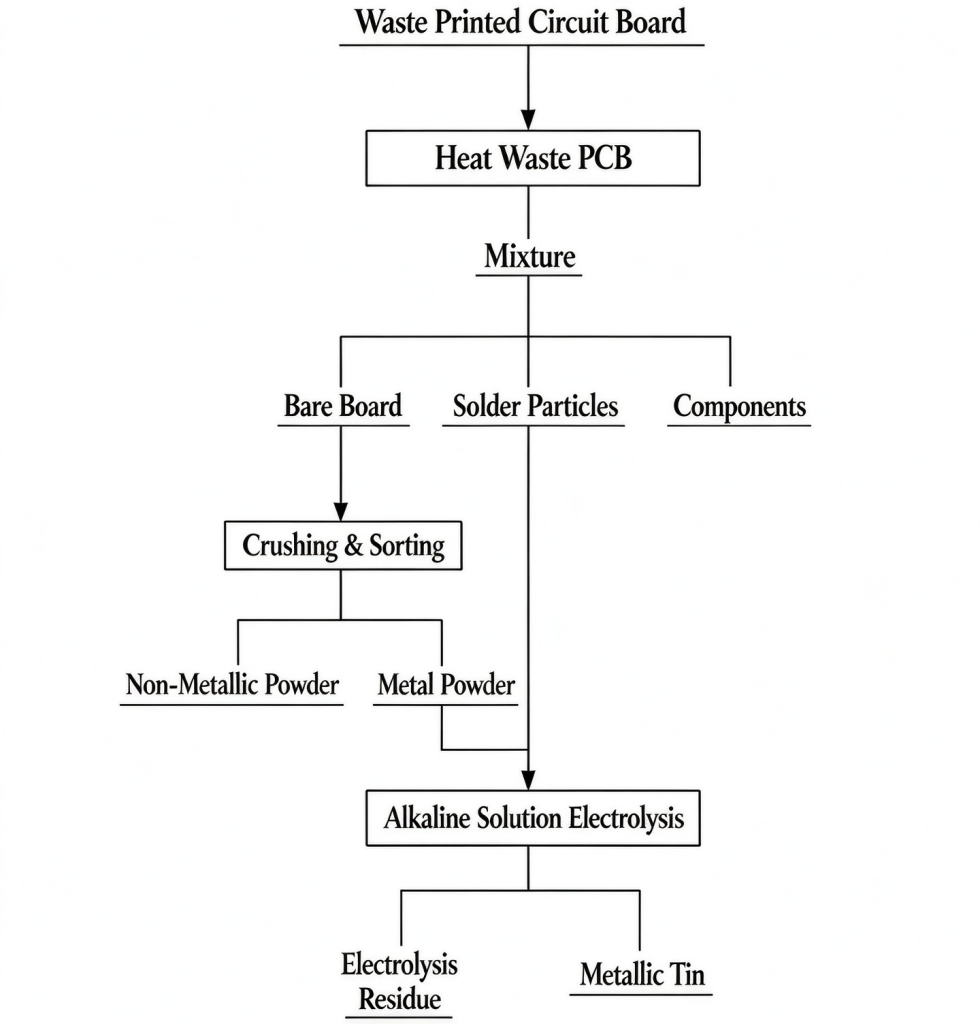
- Thermal separation of waste printed circuit boards Feed waste PCBs into a hot‑air rotary drum. Hot air at 180‑200 °C is blown in while the drum rotates. Gentle heating detaches electronic components from substrates to form mixed material. The mixture goes through multi‑stage vibrating screening to separate bare boards, electronic components and solder granules. Operating temperature stays below 200 °C to avoid dioxin formation. Waste gas can be collected for centralized treatment.
- Crushing & eddy‑current electrostatic sorting for bare boards The bare boards go through two‑step crushing: first crushed below 20 mm, then further ground to particle size under 0.5 mm. Eddy‑current electrostatic separator divides crushed material into metal powder and non‑metal powder. The collected metal powder is blended with previously separated solder granules to prepare mixed metal powder as electrolysis raw material.
- Alkaline electrolysis for selective tin extraction Adopt sodium hydroxide solution (10‑20 wt%) as circulating electrolyte. Load mixed metal powder inside the mesh‑structured anode cavity. Under controlled electrolytic conditions (cell voltage: 2.5‑3.5 V; current density: 150‑250 A/m²), tin dissolves into stannate ions in alkaline medium and migrates toward cathodes, depositing as high‑purity sponge tin on cathode surfaces. Copper, silver and other metals barely dissolve in alkali solution and remain as electrolytic residues inside anode baskets for subsequent precious‑metal recovery.
The electrolytic cell is equipped with a rotatable cylindrical primary cathode plus an auxiliary secondary cathode inside the anode chamber. Rotation speed of the primary cathode is kept at 3‑8 rpm to reduce concentration polarization, lower power consumption and upgrade deposited tin quality.
Key Performance Data from Practical Tests
Using real‑world waste TV PCBs (2.3 wt% average tin content):
- Under optimized parameters: cell voltage 3 V, current density 200 A/m², rotating cathode speed 5 rpm, 48 h electrolysis: sponge tin purity reaches 99.1 %, tin recovery yield hits 98.7 %.
- When cathode stays static without rotation: purity drops to 97.4 % and recovery rate falls to 87.8 %, proving the importance of cathode rotation.
- Adjusting voltage and current density within the process window can balance production throughput and product purity according to client requirements.
Major Advantages of This Technology
✅ Ultra‑high tin recovery Captures both free solder granules and residual tin locked inside crushed bare boards, maximising tin output from your PCB scrap stock.
✅ High‑quality direct‑use tin product Output sponge tin features high purity, ready for direct ingot casting without complicated post‑processing steps.
✅ Environment‑friendly & low waste output No nitric acid or other corrosive acid chemicals. Alkaline electrolyte circulates repeatedly with nearly zero wastewater discharge. Working temperature under 200 °C prevents dioxin hazardous gas generation. Electrolytic residues can be further processed for copper and precious metal recovery, making full use of feedstock value.
✅ Wide material adaptability Works for single‑sided, double‑sided and multi‑layer waste printed circuit boards, no special pre‑treatment requirement for incoming scrap boards.
✅ Economical operation Reduced reagent consumption, little waste‑water treatment workload, and additional income from copper‑rich electrolytic slag improve overall project profit margin.
Suitable Application Scenarios
- E‑waste recycling plants processing large volumes of waste printed circuit boards
- Existing PCB recycling lines looking to add dedicated solder‑tin recovery module
- Hydrometallurgical factories targeting secondary tin resources
- Circular‑economy projects focusing on electronic scrap resource regeneration