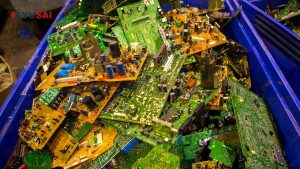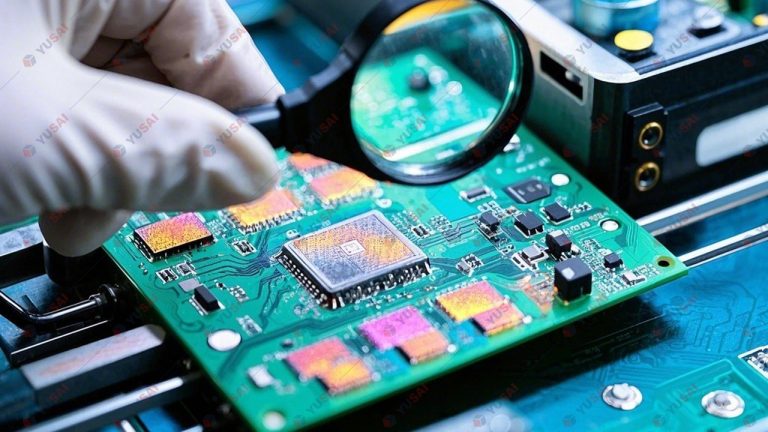
As global electronic consumption keeps expanding, massive volumes of waste printed circuit boards (WPCBs) are generated every year. Circuit boards serve as core interconnecting components for nearly all electronic products, loaded with abundant valuable metals including copper, iron, aluminium, tin, lead, gold and silver. For one tonne of collected computer PCB scrap, typical metal content reaches 130 kg copper, 0.45 kg gold, 41 kg iron, 29 kg lead and 20 kg tin, representing remarkable economic value for secondary resource recovery.
Improper disposal of waste PCBs creates severe environmental risks. Heavy metals may leach into soil, surface water and underground aquifers, threatening human health and ecosystems. Open burning releases highly toxic pollutants such as dioxins, furans and polychlorinated biphenyls. Consequently, eco‑friendly and cost‑effective recycling has become an urgent priority for e‑waste management worldwide.
Among mainstream recovery routes, chemical hydrometallurgical and pyrometallurgical processes often bring high operating costs and unavoidable secondary pollution. Physical mechanical recycling has risen as the dominant industrial option, featuring low pollution, comprehensive material recovery and competitive running expenses. Chemical treatment can be applied as post‑processing to further upgrade metal purity when required.
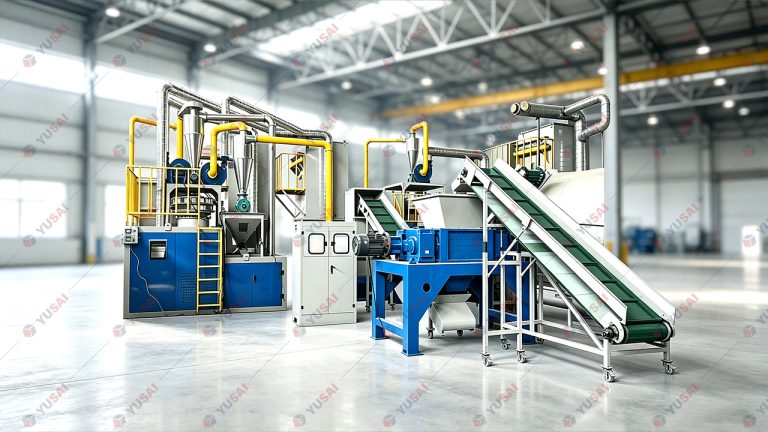
Physical recycling separates metals from non‑metallic fractions based on differences in material density, electrical conductivity and magnetic properties. Complete monomer liberation between metallic and non‑metallic phases via multi‑stage crushing is the fundamental prerequisite for high‑efficiency sorting. Major processing equipment includes hammer crushers, shear shredders and rotary pulverizers. After crushing, magnetic separation, gravity concentration, air classification and electrostatic separation are deployed to produce metal‑rich concentrates and non‑metallic mixtures for further utilization.
Three mature physical‑process categories are widely applied across global recycling plants: dry crushing & dry separation, wet crushing with shaking‑table gravity separation, and hybrid dry‑wet combined treatment.
1. Dry Crushing & Dry Separation Process
Dry processing completes size reduction under ambient dry conditions. However, intense mechanical impact can produce local hot spots above 250 °C, triggering partial thermal decomposition of resin materials. This creates fine dust emissions and harmful volatile fumes. Mitigation options include dust‑extraction systems, gas adsorption, reduced impact speed or cryogenic grinding with liquid nitrogen, yet these measures either cut processing throughput or push capital costs significantly higher.
Well‑known reference cases include the Daimler‑Benz Ulm Research Centre four‑stage workflow: pre‑crushing → magnetic separation → liquid‑nitrogen cryogenic grinding → screening and electrostatic sorting. Specially‑designed electrostatic separators can handle particles finer than 0.1 mm and reclaim trace precious metals even from dust streams. In China, Beihang University developed a patented dry‑processing route: two‑step mechanical pulverization produces mixed powder of 30‑100 mesh, followed by multi‑fraction vibration screening and air separation. Recovered metal powder is collected by cyclone separators while non‑metallic powder can be reused as plastic filler raw material.
2. Wet Crushing & Gravity Separation Process
Wet crushing introduces water during pulverization, which effectively suppresses dust diffusion and eliminates over‑heating‑induced thermal decomposition, solving two major pollution pain‑points of dry crushing. Commercial Chinese equipment suppliers adopt the “wet crushing + hydraulic shaking‑table separation” flow: waste PCB feedstock goes through coarse crushing, fine crushing and slurry mixing; then gravity shaking‑tables divide slurry into metal‑rich concentrates and non‑metallic residues. Another representative solution developed by Tsinghua University implements wet spray crushing and gravity re‑selection supported by a circulating water loop, delivering separated metal products and non‑metallic solids after solid‑liquid separation.
One practical drawback of wet technology lies in water‑treatment investment. To avoid wastewater discharge and resource loss, production sites need complete facilities for water recycling and effluent treatment for closed‑loop operation, raising total capital and operational expenditure. Without proper wastewater management, secondary water pollution may occur on‑site.
3. Hybrid Dry‑Wet Combined Process
A typical hybrid solution applies dry crushing first, followed by electrostatic separation plus high‑intensity centrifugal sorting. Waste PCBs are coarsely shredded by double‑roller crushers then finely ground by impact crushers. Material is classified into three particle fractions: −2 + 0.5 mm, −0.5 + 0.074 mm and ultra‑fine −0.074 mm powder. Coarser fractions are treated with electrostatic separation; ultra‑fine particles and crushing dust are recovered by high‑strength centrifugal separation. Non‑metallic outputs from electrostatic units are re‑circulated for secondary crushing and sorting to lift overall recovery yield. Hybrid processing still faces technical bottlenecks in smooth interface connection between dry‑stage and wet‑stage units and remains under further industrial optimisation.
Innovative Industrial‑Oriented Wet‑Processing Flow
Targeting real‑world factory‑scale deployment, an optimised wet‑process solution has been proposed for waste PCB recycling. After specialised wet crushing, material passes 1 mm hydraulic classification. Both oversize (+1 mm) and undersize (−1 mm) fractions are fed into shaking‑table separation respectively to obtain metal‑rich concentrates. Plastic fractions are separated via sedimentation. Clarified water is directly recycled; part of the wastewater receives simple treatment and returns to shaking‑table operations. Recovered metals and plastics are sent for downstream comprehensive valorisation. This compact workflow aims for easy industrial scaling, though further tuning is still required to adapt to varying feedstock characteristics on commercial production lines.
Why Choose Physical‑Mechanical PCB Recycling Solutions
- Green environmental performance: Minimised secondary pollution compared with smelting or direct chemical leaching; avoids dioxin risks from incineration.
- Full‑value resource recovery: Simultaneously recovers copper, precious metals, and reusable non‑metallic plastic/resin raw materials.
- Flexible technical selection: Customers can select dry, wet or hybrid configurations according to local environmental‑regulatory requirements, water‑resource availability and project budget.
- Scalable capacity: Modular lines support small‑to‑medium recycling workshops up to large‑scale industrial e‑waste treatment plants.
As global circular‑economy regulations tighten, waste‑PCB physical recycling represents a sustainable business opportunity for e‑waste processors, metal smelters and secondary‑material traders worldwide. We provide technical consultation, process‑flow customisation and equipment matching services to support international partners to build stable, profitable and environmentally compliant waste‑circuit‑board recovery projects.