Quick Reference to Core Price Ranges
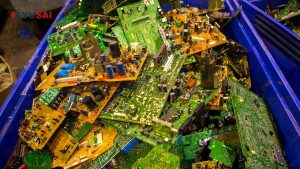
Based on 2024 global market statistics, recycling prices for different types of waste printed circuit boards vary widely. Household single/double-sided PCBs (from TV sets, remote controls) are priced at 7–36 USD/kg, featuring low metal content and simple manufacturing process. Desktop motherboards, built with multi-layer PCBs and gold-plated slots, command 24–49 USD/kg. Laptop motherboards with higher integration reach 42–68 USD/kg.
Mobile phone motherboards carry gold content of 80–350 ppm, priced at 85–380 USD/kg. Industrial telecom base station boards and server motherboards stand out due to high palladium content, with quotes from 130–410 USD/kg. Premium gold-plated specialty boards can even reach 450.5 USD/g, though such materials are extremely rare in the market.
In-depth Analysis of Price Determinants
Metal Content
The core value of scrap PCBs lies in embedded metals. Typical FR‑4 multi-layer boards contain 13.2%–22% copper, 180–800 g/ton gold, 1.2–2.6 kg/ton silver, and 40–600 g/ton palladium. One ton of computer motherboards can yield 300–500 g gold (125 times the grade of natural gold ore), 130 kg copper and 40 kg lead. Mobile phone boards hold around 250 g gold per ton, while server motherboards exceed 500 g gold per ton, directly pushing up recycling prices.
PCB Structure Differences
Multi-layer boards carry a 30%–50% premium over single-sided boards for their complex structure and stacked metal layers. HDI (High-Density Interconnect) boards feature ultra-fine lines and spacing with high metal utilization, usually priced 20% higher than standard multi-layer PCBs.
Surface Finishing Impact
Immersion gold boards deliver higher recycling value than tin-lead HASL boards, with a price premium of over 30%. For instance, immersion gold desktop motherboards of the same specification can reach 49 USD/kg, while HASL versions only hit 35 USD/kg.
Regional Market Gaps
Major global electronics manufacturing hubs enjoy fiercer competition among recyclers, offering prices 10%–15% higher than less industrialized regions. For example, mobile phone motherboard recycling prices in top electronics hubs can reach 380 USD/kg, while the same material in inland regions averages 320 USD/kg.
Channel Price Variance
Formal certified recyclers must cover environmental compliance costs, so their offers are generally 15%–20% lower than informal scrap dealers. However, unregulated brokers often use misleading one-time pricing traps. Third-party metal assay testing is recommended before final negotiation.
High Profit Potential: Up to 90% Material Recoverability from Waste PCBs for Gold, Silver & Copper Extraction
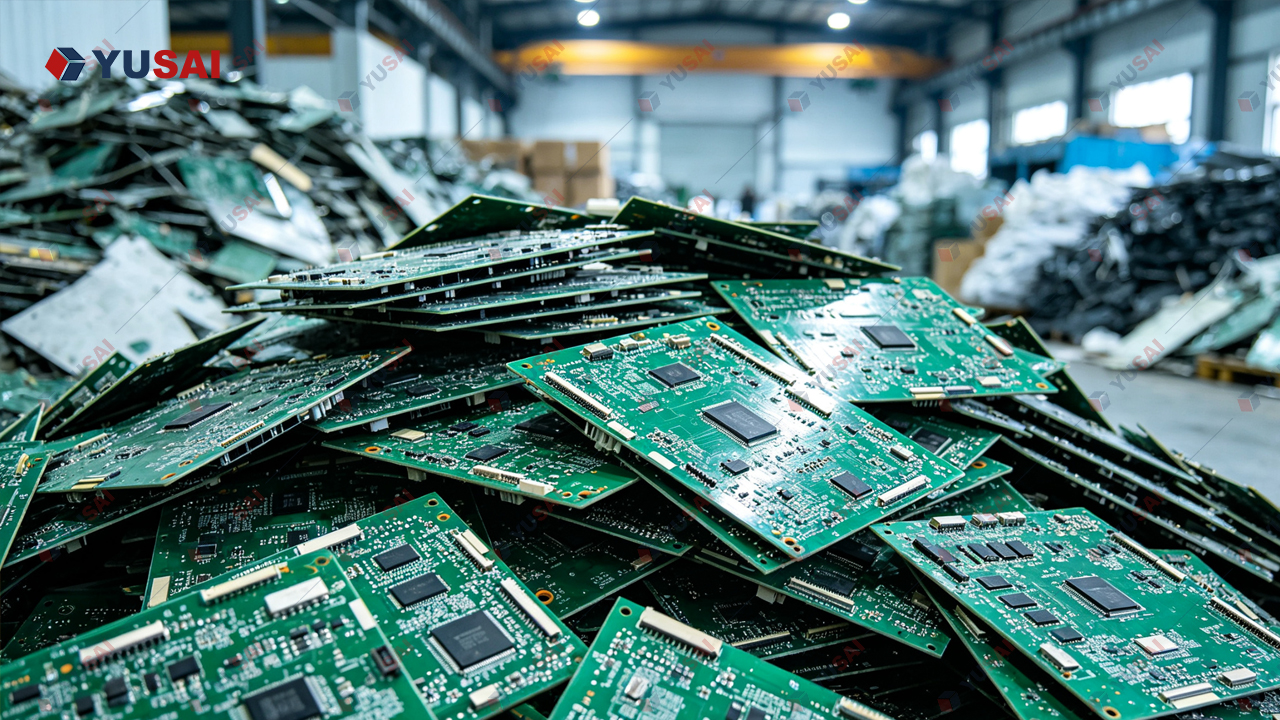
Billions of tons of waste printed circuit boards are discarded worldwide every day, driven by widespread electronics adoption and rapid product iteration. Massive volumes of scrap PCBs are generated globally. Unregulated stockpiling of these e-scrap creates severe environmental pollution and poses risks to public health.
According to the UN 2020 Global E-waste Monitor, the world generated approximately 53.6 million tonnes of e-waste in 2019, yet only 17.4% was formally collected and recycled. Forecasts indicate global e-waste output will climb to 74 million tonnes by 2030.
Waste PCBs are far from useless rubbish. Up to 90% of their materials can be recovered for commercial use, delivering remarkable recycling value.
There are two mainstream recycling workflows for scrap PCBs:
- Boards with intact electronic components: Components are stripped by dismantling machines first. Separated components and bare substrates then go through further processing.
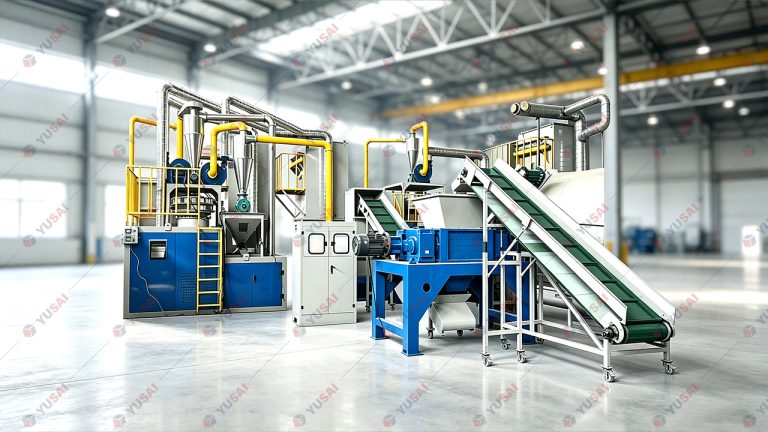
- Bare boards without electronic parts: Direct crushing and separation to isolate resin, fiber, gold, silver, copper and other metals. Refined metals are sold to generate revenue.
Important Notice: Scrap PCB recycling and processing require valid international & local environmental permits. Unauthorized dismantling and refining violate global waste trade rules and local legislation.
Global Compliance Requirements for Scrap PCB Recycling & Processing
Cross-border recycling, dismantling and crushing of waste PCBs must comply with international conventions and local regulatory frameworks. Key requirements include:
- Operators shall apply for manufacturing and operation permits from competent local authorities, and only conduct dismantling activities after official approval.
- Under the WEEE regulatory framework, recyclers need to submit written applications to local environmental authorities to obtain e-waste treatment qualification certificates.
- Additional environmental permits must be secured by filing full documentation with environmental regulators.