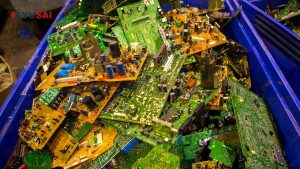
Most operators in the renewable resource and e-waste recycling industry face the same dilemma: large quantities of waste printed circuit boards (PCBs) in stock that seem profitable on the surface but merely occupy factory space, tie up capital, and depreciate over time.
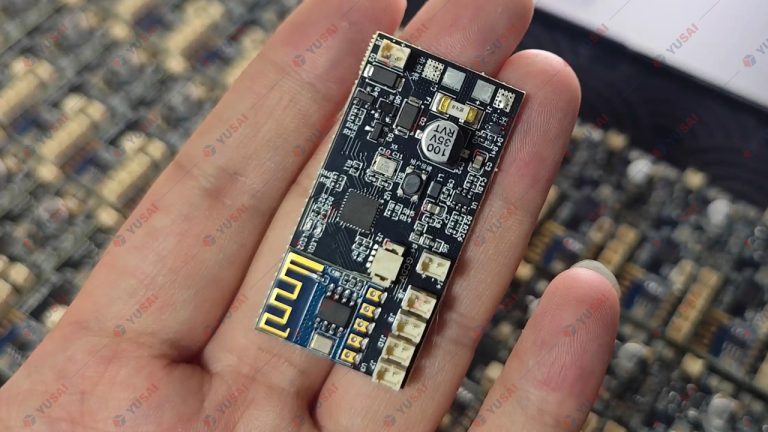
Often mistaken for ordinary industrial scrap, PCBs are complex composite materials consisting of copper foil, aluminum and iron components, chip contacts, electronic components, plastic resin, and mixed wires. With high-value metal content, PCBs are core profitable materials in e-waste recycling. However, difficult disassembly, complicated separation, and high material loss have become major bottlenecks limiting profit growth for recycling plants.
Many processors do not lack material supply — they lack a mature and stable PCB crushing and separation solution. Manual disassembly is extremely inefficient and labor-intensive. Ordinary crushing equipment causes severe material mixing and metal encapsulation, resulting in low metal recovery rates. Non-standard processing also leads to excessive dust, high noise, and messy workshop conditions, further squeezing overall profit margins.
The key to profitable PCB recycling is not simply “crushing the boards”, but achieving efficient separation, precise metal recovery, and operational cost reduction after crushing.
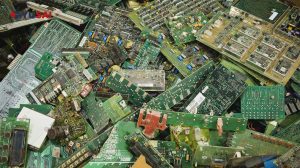
Why Ordinary Crushers Fail in PCB Processing
PCBs feature a unique combination of brittle substrates, hard chips, ductile metal foil, and flexible plastic — far more complex than ordinary plastic or metal scrap. General-purpose crushers are not designed for such complex working conditions and inevitably expose critical defects during long-term operation:
1. Feeding Slippage and Frequent Blockages
PCB surfaces are flat, rigid, and edged with metal. Ordinary crushers adopt simple feeding structures that cannot grip PCB materials stably, causing frequent slippage, idling, and jamming. Frequent manual intervention severely disrupts production continuity.
2. Ununiform Particle Size Invalidates Subsequent Separation
General crushers produce inconsistent particle sizes, ranging from large fragments to fine powder. Metals cannot be effectively separated from plastic and resin matrices. Subsequent magnetic separation, air separation, and electrostatic separation fail to operate accurately, leaving massive metal encapsulated in plastic and drastically reducing material value and market quality.
3. Rapid Roller Wear and High Maintenance Costs
Hard chip particles, metal contacts, and alloy fragments inside PCBs generate strong impact force during crushing. Ordinary roller blades with low hardness suffer rapid wear, edge curling, and chipping. Frequent shutdowns for blade replacement and maintenance increase spare parts costs and reduce overall production capacity.
4. Excessive Dust and Noise Fails Environmental Compliance
PCB crushing generates fine particulate dust. Ordinary equipment lacks effective sealing, causing dust leakage that endangers worker health and triggers environmental inspection risks. Excessive operating noise also creates noise pollution and hidden operational hazards for factories.
5. High Failure Rate and Poor Continuous Operation Stability
Low-cost universal crushers are only suitable for light and intermittent crushing tasks. Under the high-intensity and variable impact loads of PCB processing, motors, reducers, and transmission systems are prone to overload failures, leading to frequent shutdowns and unstable production.
Specialized PCB Crusher Solves Core Industry Pain Points
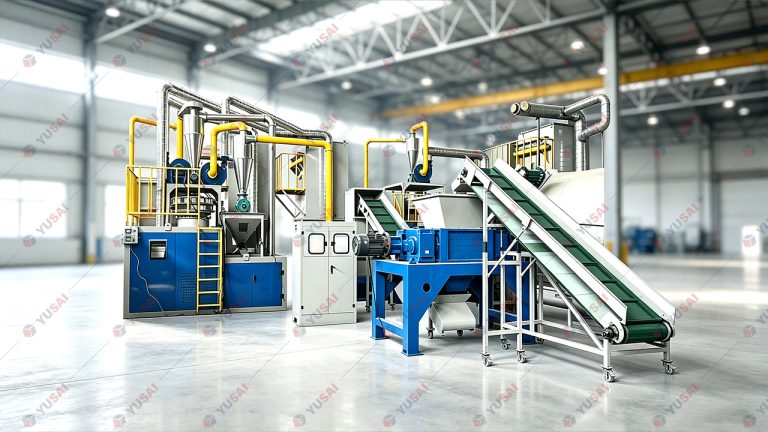
Our professional PCB crusher is not a renamed ordinary crusher. It features fully optimized structures and enhanced performance tailored for waste PCBs, chip boards, electronic component boards, residual wires, and mixed e-waste, precisely solving common recycling and processing difficulties.
1. Custom Press-Feeding Structure Eliminates Slippage and Blockage
Equipped with a dedicated board-specific hopper and forced pressing feeding system, the equipment stably grips flat and rigid PCBs. It completely avoids idling, slippage, and material jams, realizes automatic continuous feeding, and greatly reduces manual intervention.
2. Uniform Crushed Particle Size Enables High-Precision Separation
The specialized crusher produces regular, controllable particle sizes and achieves thorough separation of metals from plastic, resin, and impurities. It perfectly matches downstream magnetic, air, and electrostatic separation equipment, enabling accurate separation of copper, aluminum, iron, and non-metallic materials, and significantly improving finished material purity and market value.
3. High-Wear-Resistant Rollers Adapt to Heavy-Duty Working Conditions
To withstand strong impacts from hard chips and metal contacts, the machine adopts customized high-performance rollers with professional heat treatment technology, featuring high hardness, impact resistance, and durability. The quick-detachable blade structure reduces maintenance frequency and spare parts costs.
4. Fully Enclosed Structure Optimizes Workshop Environment
The fully enclosed crushing cavity and professional noise reduction structure effectively suppress dust leakage and operating noise. The equipment meets environmental production standards, improves on-site working conditions, and avoids environmental compliance risks.
Reduce Multiple Hidden Costs with One Specialized Machine
Most processors only focus on equipment purchase prices while ignoring hidden costs including labor, site occupation, material loss, and downtime maintenance — the core reasons why many recycling factories appear profitable on the surface but lose money in practice. Our dedicated PCB crusher comprehensively reduces overall production costs.
1. Cut Labor Costs and Eliminate Inefficient Manual Disassembly
Traditional PCB sorting, disassembly, and pre-crushing rely heavily on manual labor with low efficiency. After equipment deployment, workers only need to complete simple feeding, patrol inspection, and discharging tasks, eliminating repetitive manual work and greatly reducing labor input.
2. Save Site Space and Improve Inventory Turnover
Waste PCBs are bulky and space-consuming, prone to dust accumulation and moisture deterioration during long-term stacking. Crushing drastically reduces material volume, enabling factories to store several times more materials in the same warehouse space, accelerate inventory turnover, and solve overstocking problems.
3. Minimize Material Loss and Maximize Metal Recovery Rate
The core profit of PCB recycling comes from the recovery of copper, aluminum, and rare metals. Ordinary crushing causes metal powder loss and incomplete metal separation due to plastic encapsulation, resulting in severe profit loss. Professional precision crushing achieves full metal dissociation and maximizes the utilization value of every batch of materials.
4. Stabilize Product Quality and Enhance Long-Term Business Reputation
Uniform crushed particles ensure stable and high-purity separated metal and plastic materials with better market prices. Standardized output helps factories establish long-term stable cooperation with purchasers and form a sustainable profit cycle.
How to Select a Qualified PCB Crusher: Prioritize Comprehensive Strength Over Low Price
Low-cost e-waste crushing equipment seems cost-effective at first but brings endless hidden troubles. After short-term operation, cheap machines suffer unstable feeding, rapid blade wear, excessive dust, disordered discharging, and frequent failures. Frequent downtime and maintenance delay production and increase long-term operating costs.
Professional recyclers focus on five core criteria to avoid procurement risks:
1. Whether the feeding structure is professionally designed for board materials to prevent slippage and blockage;
2. Whether roller material and heat treatment process are reliable for long-term heavy-duty operation;
3. Whether motors, reducers, and transmission systems provide stable continuous operation;
4. Whether equipment sealing, dust control, and noise reduction meet industrial standards;
5. Whether the manufacturer provides complete trial operation, installation, training, and after-sales services.
Original Manufacturer Supply: Professional Custom E-Waste Crushing Solutions
We are a professional manufacturer of PCB recycling and crushing equipment with no middlemen markup. We independently control all core processes including structural design, frame welding, roller precision processing, machine assembly, and factory testing. All equipment is specially optimized for PCB and mixed e-waste working conditions instead of adopting universal machine templates.
Strong Working Condition Adaptability: Solves industry pain points such as board feeding slippage, hard material blade chipping, and incomplete material dissociation, suitable for waste circuit boards, household appliance control boards, and electronic residual materials.
High Operational Stability: Reinforced machine frame and upgraded transmission system support long-term uninterrupted continuous production, meeting large-scale factory processing demands.
Low Procurement Risk: Support customer on-site material trial operation to verify feeding, crushing, discharging, dust control, noise, and overall stability before delivery.
One-Stop After-Sales Guarantee: Provide on-site installation and commissioning, operational training, daily maintenance guidance, long-term spare parts supply, and rapid technical support to ensure stable machine operation and avoid idle equipment.
Target Customers Suitable for This Equipment
This professional PCB crushing solution is applicable to both small individual processing workshops and large-scale renewable resource enterprises engaged in waste PCB and e-waste processing:
E-waste recycling stations, renewable resource processing factories, metal and plastic separation plants, waste household appliance dismantling enterprises, and individual e-waste processors.
Conclusion: Profit From E-Waste Depends on Refined Processing, Not Stockpiling
Waste PCBs are highly valuable resources — low-efficiency manual disassembly and ordinary crushing equipment waste their economic potential. The core profit of the renewable resource industry no longer relies on simple material stockpiling, but on refined processing, standardized separation, and maximum efficiency and loss reduction.
Equipping your factory with stable, condition-matched professional PCB crushing equipment eliminates inefficient processing, reduces material loss, revitalizes overstocked materials, and converts waste e-waste into steady and substantial profits.